Texas just finished a summer that showed both sides of its power story. Electricity demand climbed to a new record, yet the grid kept serving a state that is adding homes, factories, solar farms, batteries, crypto mines, and enormous data centers at the same time.
The number that stands out is 91,089 megawatts. ERCOT lists that as the current 2026 all-time peak, set on July 22. That is about 5,600 megawatts above the old 2023 record. The bigger question now is not whether Texas can survive one hot afternoon. It is how fast the grid can expand while a wave of very large new power users asks to connect.
Texas Set a New Power Demand Record in July
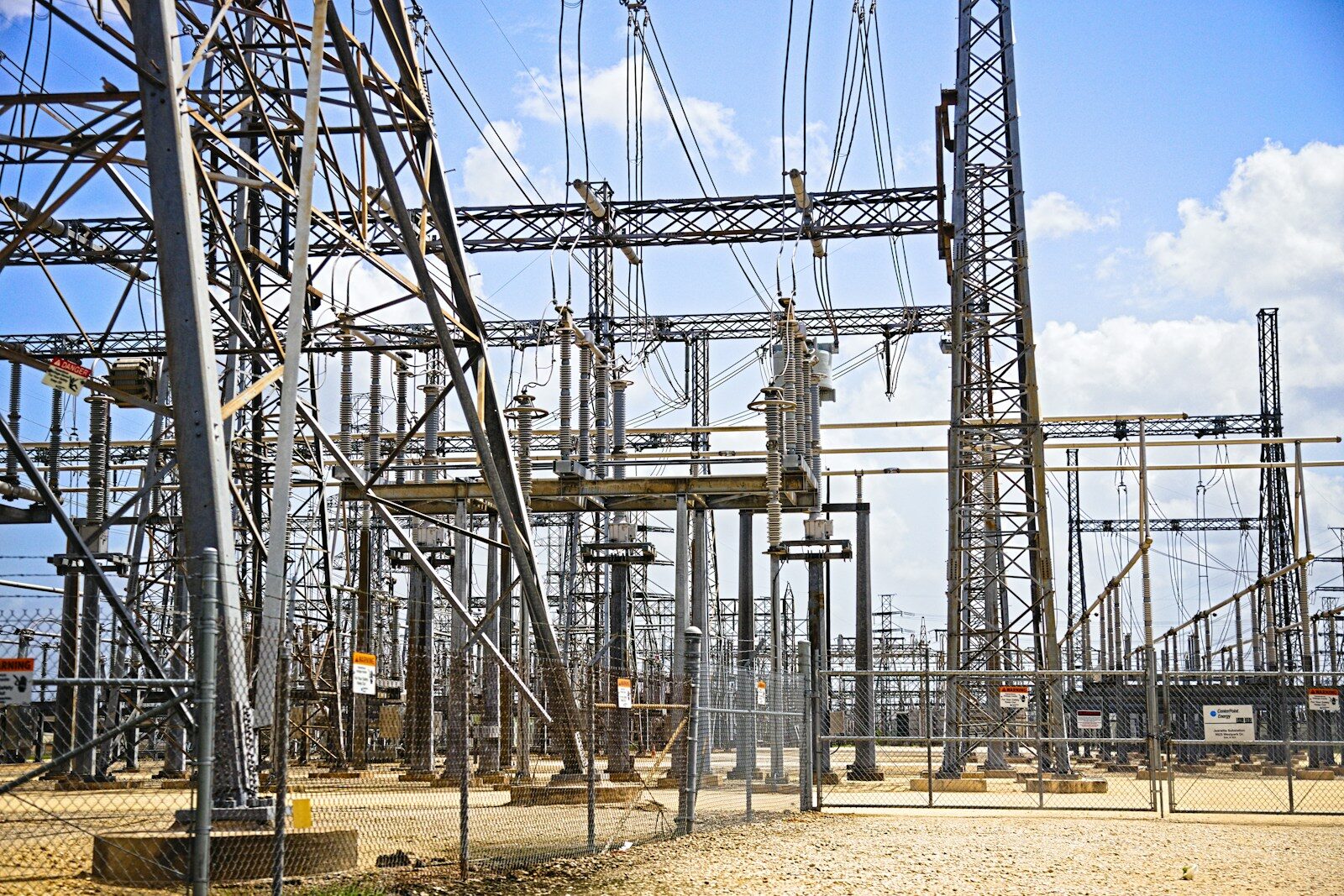
ERCOT’s current peak-demand record page lists July 22, 2026 at 91,089 megawatts.
For context, the previous all-time record was 85,508 megawatts in August 2023.
That is a big jump in only three years.
ERCOT had gone into summer expecting the possibility of a new record. Its May outlook forecast a summer peak of about 92,211 megawatts because of hotter expected weather and new electric loads.
The actual July record came close to that forecast.
Texas Demand Is Growing Faster Than Air Conditioners Alone Can Explain
Hot weather still matters.
When millions of air conditioners run at once, demand climbs fast.
But Texas is also adding permanent load.
More people live in the state.
Factories are expanding.
Oil and gas operations use more electric equipment.
Crypto mining remains part of the system.
And data centers are becoming a much larger piece of long-term planning. The digital side of that growth is easier to understand through this multi-cloud hosting guide for modern businesses, while Texas is dealing with the physical power and transmission demands behind those computing services.
ERCOT’s summer outlook expected roughly 1,725 megawatts of large-load growth from May through September 2026, plus about 466 megawatts of crypto-load growth since September 2025.
That is not a temporary heat wave.
It is new demand that can stay on the grid year after year.
Data Centers Have Become the Main Long-Term Question
The scale of proposed data-center demand is difficult to picture.
In June, ERCOT said it was tracking more than 438,000 megawatts of large-load requests, with nearly 89% tied to data centers.
By August, the Texas governor’s office said the total request queue had grown above 474 gigawatts.
That does not mean 474 gigawatts of data centers will actually connect.
Many projects will change, shrink, move, fail financing, or never be built.
That distinction matters.
A request queue is not the same thing as real future demand.
But even a fraction of that queue is large enough to reshape transmission planning.
Texas Created a New Batch Process for Huge Loads
Texas no longer wants to study every giant load as if it exists alone.
In June, the Public Utility Commission approved ERCOT’s new “Batch Zero” process.
It groups qualifying large-load projects of 75 megawatts or more so ERCOT can study their combined effect on the system.
That matters because ten large projects in the same region can create a very different grid problem from ten projects scattered around Texas.
The batch approach lets planners look at:
- available transmission capacity;
- voltage stability;
- generation needs;
- where upgrades are required;
- whether too many projects are trying to connect in one area.
This is a much more realistic way to study rapid data-center growth.
Then Texas Hit the Brakes in August
On August 3, Governor Greg Abbott directed ERCOT and the Public Utility Commission to conduct a broader verification and audit of data centers advancing through the interconnection process.
ERCOT delayed Batch Zero classifications while that work continued.
On August 31, ERCOT said it still needed more time for data validation and due diligence before releasing conditional classifications.
That tells us something important.
Texas still wants the economic growth.
But state leaders do not want speculative or poorly documented projects consuming planning capacity that could be needed by real projects.
A 500-Megawatt Data Center Is Not a Normal New Customer
Scale changes everything.
ERCOT notes that one megawatt can serve roughly 250 Texas residential customers during peak conditions.
Using that rough comparison, 500 megawatts is on the order of the peak demand of 125,000 homes.
That does not mean a data center behaves exactly like those homes.
It does show why grid planners cannot treat a giant computing campus like a new grocery store.
It may need new substations, transmission lines, transformers, and local generation support.
Texas Is Not the Only State Asking Who Pays
Data-center growth is becoming an electricity issue across the country.
Our guide to Illinois data centers and electric-grid pressure looks at a market where AI infrastructure is also colliding with utility planning and consumer concerns.
The same basic question keeps appearing.
Who pays for the wires, substations, generation, and reserves needed to serve enormous new customers?
The answer depends on state law and utility structure.
But households have a fair reason to care when billions of dollars of grid investment are involved.
Senate Bill 6 Was Designed Around That Problem
Texas Senate Bill 6, passed in 2025, created a framework for handling very large electric loads.
Its implementation continued through 2026.
The law and related rulemaking deal with several issues, including:
- how large loads enter long-term forecasts;
- interconnection standards;
- financial commitments for infrastructure;
- large-load curtailment during grid emergencies;
- co-located generation arrangements;
- how transmission costs should be allocated.
In other words, Texas is trying to keep a giant customer from arriving with giant costs and leaving ordinary customers to absorb too much of the risk.
Large Loads Can Also Become a Reliability Resource
One interesting part of the new Texas framework is flexibility.
A giant data center may consume a lot of power.
But some large loads may also be able to reduce demand quickly when the grid is under stress.
Senate Bill 6 called for a reliability service that can competitively procure demand reductions from loads of 75 megawatts or more during anticipated emergency conditions.
That idea makes sense.
If Texas is going to connect very large flexible customers, it should also capture the reliability value of their ability to reduce load when needed.
Solar Changed the Shape of a Texas Summer Day
Texas has added a huge amount of solar generation over the last several years.
That helps during hot sunny afternoons when air-conditioning demand is high.
But solar production falls toward sunset.
Demand does not disappear at the same time.
People come home.
Kitchens run.
Air conditioners keep working.
That creates a daily transition where other resources have to take over.
Batteries Are Becoming More Important at Sunset
Battery storage is one of the resources helping bridge that transition.
Batteries can charge when electricity is abundant and discharge later when the grid needs extra power.
They can also respond quickly to sudden changes in frequency or generation.
ERCOT is now treating storage as a large enough part of the system that it updated planned-outage limits for energy-storage resources in August 2026.
That is a sign of maturity.
Batteries are no longer a side experiment on the Texas grid.
Natural Gas Still Matters When the Sun Goes Down
Texas has a diverse generation fleet, but natural gas remains central to reliability.
Gas plants can run after sunset and during long periods when wind or solar output is lower.
That makes gas supply, plant maintenance, pipeline reliability, and generator performance part of the summer story too.
The grid works because resources complement one another.
There is no single generator that solves every hour.
The July Record Did Not Mean the Grid Was Failing
A demand record sounds alarming.
It is not automatically an emergency.
ERCOT entered summer saying it expected sufficient generation under expected weather conditions.
During the July 22 record day, operators used normal reliability tools, including ancillary reserves.
That is what a grid operator is supposed to do.
The more important question is how much margin the system has under a combination of extreme heat, major plant outages, low renewable output, transmission constraints, and fast-growing demand.
Your Electric Bill Is Not the Same Thing as ERCOT Demand
This is where household discussions often get mixed up.
ERCOT manages the wholesale grid and market across most of Texas.
Your retail bill can include several different pieces.
Depending on where you live, those can include:
- the energy price in your retail plan;
- transmission and distribution charges;
- taxes and fees;
- monthly base charges;
- time-of-use or usage rules.
A record demand day does not automatically mean your bill jumps that same day.
If you are on a fixed-rate retail contract, the energy price may already be locked for the term.
But long-term grid investment can influence transmission charges and future retail pricing.
Read Your Texas Electricity Plan Before Renewal
For households in competitive retail areas, the most useful thing you can do is read the Electricity Facts Label.
Look at more than the advertised cents-per-kilowatt-hour number.
Check:
- contract length;
- fixed or variable pricing;
- base charges;
- bill credits;
- minimum-use rules;
- early termination fees;
- renewable content;
- transmission and distribution charges.
A plan that looks cheap at exactly 1,000 kilowatt-hours can be much less attractive at 700 or 1,800.
Efficiency Still Matters Even When the Grid Is Growing
No household can solve Texas data-center policy by changing a thermostat.
But reducing waste still helps the bill.
Air sealing, attic insulation, clean filters, shaded windows, efficient HVAC equipment, and reasonable thermostat settings can lower summer use without turning the house into an oven.
Do the cheap basics before buying flashy equipment. A plug-in electricity usage monitor on Amazon can also help you find smaller appliances and electronics that quietly add to household use.
Backup Power Is About Outages, Not ERCOT Prices
A home generator or battery does not make the wholesale grid problem disappear.
It serves a different purpose.
Backup power can keep refrigerators, medical equipment, lights, fans, internet gear, or selected circuits running during a local outage.
Our comparison of portable power stations versus fuel generators explains the trade-offs between quiet battery backup and longer-running fuel equipment.
Remember that many outages are local distribution problems caused by storms, trees, equipment failure, or damaged lines.
ERCOT can be operating normally while your street is dark.
Data Centers May Change Where Transmission Gets Built
Large-load growth is not evenly spread across Texas.
Projects cluster where land, fiber, water, tax incentives, and electric infrastructure line up.
That can force transmission upgrades in regions that were not planned for such intense growth a few years ago.
Transmission takes time.
Rights of way have to be secured.
Equipment has to be ordered.
Public meetings happen.
Cost allocation gets debated.
A data center can be announced much faster than a major transmission project can be completed.
Virginia Shows How Big This Issue Can Become
Texas is not the first place to discover that data centers can reshape utility planning.
Our guide to Virginia data centers and electric bills looks at a state where concentrated computing demand has already become a major infrastructure and ratepayer issue.
Texas has more room, a different power market, and a different generation mix.
But the same planning lesson applies.
Power-intensive development has to be matched with real generation and transmission, not only optimistic interconnection requests.
The 2032 Forecast Is a Warning, Not a Promise
In April, ERCOT published a preliminary long-term forecast that reached about 367,790 megawatts of demand by 2032.
That number is enormous compared with today’s 91-gigawatt record.
It should not be read as a prediction that Texas will definitely consume 368 gigawatts six years from now.
The forecast reflects a huge pipeline of proposed large loads.
ERCOT and the PUCT are now tightening how those loads are verified and included in planning.
The real future number will depend on which projects are credible and actually get built.
The August Audit Is Really About Credibility
The governor’s data-center audit makes more sense in that context.
If the grid plans around hundreds of gigawatts of speculative projects, Texans could be asked to build infrastructure that is not needed.
If planners dismiss real projects as speculation, Texas could run short of transmission and generation.
Both mistakes cost money.
The goal is to separate real load from paper load as early as possible.
What I Would Watch Through 2027
The summer record is already set.
The next important story is the buildout.
I would watch:
- which Batch Zero data-center projects are finally classified as credible;
- how much financial security large loads must provide;
- whether new transmission projects are approved;
- how Texas allocates transmission costs to large loads;
- how the new large-load demand-response service works;
- whether solar, batteries, gas, and new power plants keep pace with demand;
- whether retail delivery charges rise as grid investment accelerates.
Those items tell us more about the next five years than one hot day does.
Texas Passed the Summer Test, but the Bigger Test Is Growth
Summer 2026 gave Texas a new power-demand record.
ERCOT served more than 91 gigawatts on July 22.
That is a remarkable amount of electricity.
But the most important grid story is no longer the number on one afternoon.
It is the size of the load trying to arrive next.
Texas wants data centers, factories, homes, and economic growth.
It also needs reliable power and a fair way to pay for the infrastructure that growth requires.
That balance is where the real work begins.
For households, the practical response is simpler. Understand your electric plan. Reduce waste. Keep a sensible outage plan. Watch the transmission and large-load rules instead of assuming every grid headline means your lights are about to go out.
The Texas grid handled a record summer.
Now it has to prove it can grow without making ordinary customers carry risks that belong to the biggest new users.