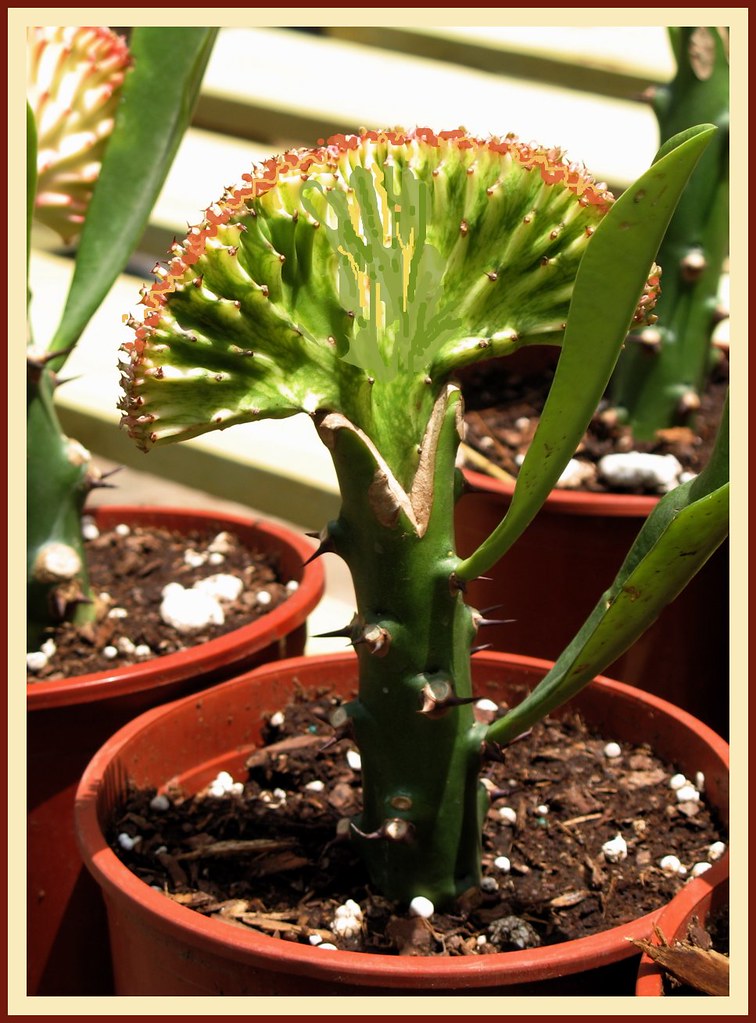
Have you ever seen a cactus with a bright top growing on a very different-looking base? That is often the result of grafting. The idea is simple: join a scion, the upper piece you want to grow, to a compatible rootstock that supplies the roots.
Cactus grafting is a fun way to experiment with unusual forms and colors, and it can also help a slow or chlorophyll-poor scion grow on a stronger root system. The cuts need to be clean, the plants need to be compatible, and the vascular rings need to overlap so the graft can unite.
Why Graft Cactus Plants?
The basic science is similar to other forms of plant grafting described by University of Missouri Extension. With cacti, growers often graft for novelty, propagation, faster growth, or to support colorful scions that cannot thrive well on their own roots.
What You Need
- A healthy cactus scion and compatible rootstock
- A very sharp, clean knife or razor
- Rubber bands, grafting tape, or another gentle way to hold the pieces together
- A clean work surface
- Gloves or tongs for spiny plants
A clean blade matters. A sharp grafting knife can make the flat, smooth cuts that give the tissues a better chance to meet cleanly.
A Simple Cactus Graft
- Choose healthy plants and sanitize the blade.
- Cut the top of the rootstock flat, then make a fresh flat cut on the bottom of the scion.
- Set the scion on the rootstock so their vascular rings overlap. They do not have to be perfectly centered.
- Hold the pieces together with light, steady pressure using rubber bands or grafting tape.
- Keep the graft dry and out of harsh direct sun while the cut surfaces unite.
- After the graft has taken, gradually return the plant to the light and watering routine appropriate for the rootstock and scion.
Do not automatically drench a fresh graft. Excess moisture around a new cut can encourage rot. If you enjoy unusual succulents, our Lifesaver cactus guide is another good place to explore plants with surprising forms.
The Key Is Tissue Contact
The important part is not a V-shaped notch or a fixed four-inch cutting. Cactus shapes vary too much for one recipe. What matters is fresh tissue, compatible plants, firm contact, and overlap between the vascular tissue of the scion and rootstock. That is the same principle behind the science of grafting trees.
Once you get comfortable with the technique, grafting becomes another useful skill for a hands-on home garden. For more plant-growing ideas beyond cacti, Alabama Grown is a useful regional gardening resource.