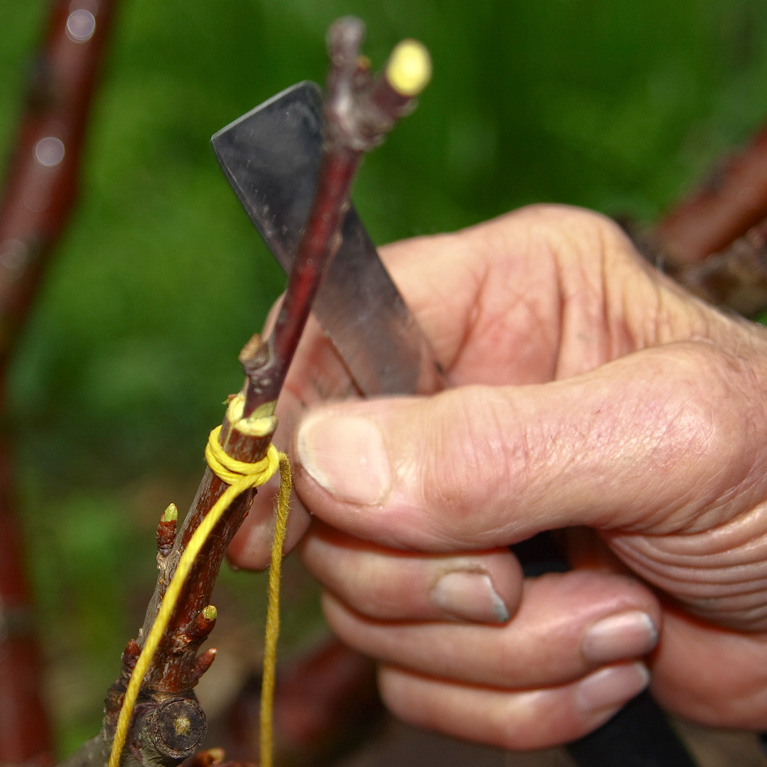
Tree grafting looks a little like plant surgery, but the idea is simple. You join a piece of one plant, called the scion, to another plant with roots, called the rootstock. If the living tissues line up and heal together, the two pieces grow as one plant.
Growers use grafting to reproduce named fruit varieties, change the size or vigor of a tree, repair damage, and sometimes put several compatible varieties on one tree. The key is not drilling a hole or adding a mystery powder. It is making clean cuts, matching compatible plants, lining up the cambium, and keeping the graft from drying out while it heals.
Why Cambium Contact Matters
The cambium is the thin layer of actively dividing tissue just under the bark. A successful graft needs the cambium of the scion to touch the cambium of the rootstock. The cut surfaces form callus tissue, and new vascular connections develop across the union. That is what eventually lets water, minerals, and sugars move through the joined plant.
The University of Missouri Extension grafting guide explains the basic techniques and why matching the tissues matters. If you are working with apples, our Honeycrisp apple tree guide gives useful context on the kind of named cultivar commonly propagated by grafting.
Common Grafting Methods
Whip-and-tongue grafting works well when the scion and rootstock are close to the same diameter. Cleft grafting is useful when adding smaller scions to a larger branch or rootstock. Budding uses a single bud rather than a section of twig. The right method depends on the plant, the size of the material, and the season.
Whatever method you use, work with a sharp, clean grafting knife or pruner. Secure the union with grafting tape or another suitable wrap so the pieces cannot shift. If you need basic tools, fruit-tree grafting knives and tape are easy to compare. For orchard care beyond the graft itself, Alabama Grown’s apple-tree guide covers planting and pruning for Southern conditions.
Aftercare Makes the Difference
Keep the graft protected while it heals, but do not leave constricting material in place so long that it girdles the growing stem. Remove shoots that emerge from the rootstock below the graft because they compete with the scion. Watch for drying, breakage, and disease around the union.
The same biological idea appears in cactus grafting, although the plants and techniques differ. And if grafting is part of a bigger home-growing project, our garden work guide has more practical ideas for keeping plants healthy.
Grafting is less mysterious once you understand what the plant is trying to do: heal two compatible pieces into one working vascular system. Clean cuts, good cambium contact, firm wrapping, and patient aftercare matter far more than complicated tricks.