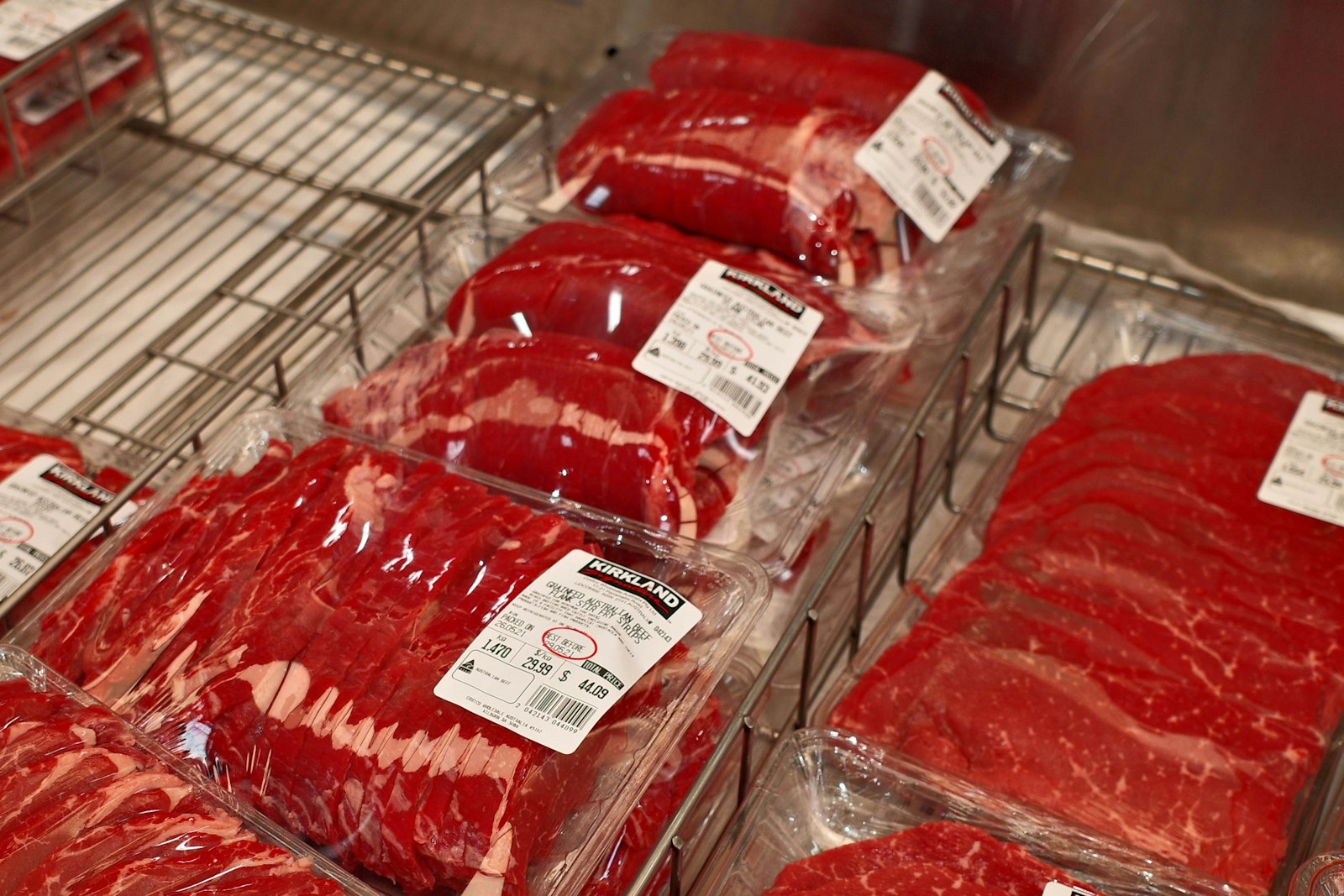
Cultivated meat is food produced by growing animal cells in a controlled environment and harvesting those cells for food. It is not plant-based meat, and it is not one single technology or product. Companies are developing cultured chicken, beef, pork fat, seafood, and other animal-cell foods using different cell lines, growth systems, scaffolds, ingredients, and manufacturing processes.
In the United States, the technology now sits in an unusual position. A federal regulatory pathway exists, FDA has completed multiple pre-market consultations, USDA has an inspection system for cell-cultured meat and poultry, and some products have received federal clearance to enter commerce. At the same time, a growing group of states has banned or temporarily prohibited manufacture or sale. The result in 2026 is a real regulatory patchwork.
Cultivated Meat Is Not Simply “Meat Without Animals”
The basic process begins with animal cells. Those cells are established in a cell line or bank and grown in a controlled nutrient environment. Manufacturers then harvest the resulting cell material and may combine it with other ingredients to create a finished food.
Marketing often describes the process as producing meat without slaughter. That can describe the intended long-term model, but the details depend on how a company obtains its original cells and what inputs its production process uses. “Cultivated” does not automatically mean animal-free, vegan, or produced without any animal-derived material.
FDA Regulates the Cell-Growing Stage
FDA oversees the early production process for human foods made from cultured animal cells. Its voluntary pre-market consultation examines the cell line, manufacturing process, controls, inputs, and the company’s basis for concluding that the cultured cell material is safe and lawful for food use.
FDA’s public inventory had been updated again by February 2026 and includes completed consultations for several types of cultured animal-cell material, including chicken and cultured pork fat. Completion of an FDA consultation does not mean the agency has “approved lab-grown meat” as one broad category. The review is product- and process-specific.
USDA Takes Over for Cell-Cultured Meat and Poultry at Harvest
For livestock and poultry species covered by federal meat and poultry inspection laws, regulatory responsibility shifts from FDA to USDA’s Food Safety and Inspection Service when cells are harvested from the sealed growth environment for further food processing.
The USDA FSIS guidance on human food made with cultured animal cells explains that establishments must obtain a federal grant of inspection, meet sanitation and HACCP requirements, undergo FSIS inspection, and use labels that have been reviewed and approved before the products enter commerce.
Seafood and Other Species Can Follow a Different Federal Path
The FDA-USDA handoff applies to livestock and poultry that fall under USDA’s meat and poultry inspection laws. Cultured seafood and foods made from some other animal species remain primarily under FDA jurisdiction.
That is another reason it is misleading to talk about one simple “cultivated meat approval.” The federal regulator and labeling pathway can depend on which animal species the cells came from.
There Is No Single Federal Front-Label Phrase for Every Product
The older version of this article predicted that shoppers would simply see “cell-cultivated” become one uniform national label. Federal policy is more specific than that.
For USDA-regulated cell-cultured meat and poultry, labels are not eligible for generic approval. Every label has to be submitted to FSIS for prior review. The agency checks that the product name and other statements are truthful and not misleading.
Approved products have used descriptive terms such as “cell-cultivated,” but that does not create a universal rule that every cultured animal-cell food in every federal jurisdiction must display those exact two words in the same format.
Federal Permission Does Not Override a State Sales Ban
A company can satisfy the federal food-safety and inspection pathway and still be unable to sell the product in a state that has enacted a prohibition.
That state-level split has grown since the first bans appeared. As of August 2026, examples include Alabama, Florida, Mississippi, Nebraska, Montana, Texas, Indiana, and South Dakota. The exact wording and duration differ by state, so businesses cannot treat them as one identical policy.
Alabama and Florida Have Broad Prohibitions
Alabama law makes it unlawful to manufacture, sell, hold or offer for sale, or distribute cultivated food products in the state. Florida law similarly prohibits manufacture for sale, sale, holding or offering for sale, or distribution of cultivated meat.
These are not merely menu-label requirements. They restrict commercial activity with the products themselves.
Mississippi, Nebraska, and Montana Added Their Own Bans
Mississippi’s 2025 legislation prohibited manufacture and sale of cultivated food products, with later legislation expanding related alternative-protein provisions. Nebraska’s 2025 law treats cultivated-protein food products as adulterated food under its Pure Food Act, effectively preventing normal manufacture, distribution, promotion, or sale.
Montana’s 2025 law prohibits manufacture for sale, sale, holding or offering for sale, or distribution of cell-cultured edible products.
Texas and Indiana Use Temporary Moratoria
Texas Senate Bill 261 took effect September 1, 2025 and temporarily prohibits offering for sale or selling cell-cultured protein for human consumption. The prohibition is scheduled to expire September 1, 2027 unless lawmakers change the law.
Indiana also enacted a temporary moratorium beginning July 1, 2025 and running through June 30, 2027. Its statute then provides a labeling framework scheduled to take effect after the moratorium, including a state-required imitation-meat disclosure unless the law changes before then.
South Dakota’s 2026 Ban Runs Through 2031
South Dakota added a prohibition effective July 1, 2026 that bars sale, offering for sale, holding for sale, or distribution of products containing cell-cultured protein. The current statute runs through June 30, 2031.
That illustrates why old state-ban lists age so quickly. A company, restaurant, or investor needs current statutory research, not a 2024 infographic.
Commercial Availability Is Still Very Limited
Federal regulatory milestones can make the industry look larger than it is. In practice, cultivated meat has remained a tiny part of the U.S. food market, with limited launches rather than broad supermarket distribution.
Scaling cells safely and consistently is expensive. Facilities need sterile or highly controlled systems, food-grade inputs, energy, equipment, quality controls, trained staff, and enough production volume to spread fixed costs across many pounds of product.
Price Parity Is an Engineering Problem, Not a Marketing Promise
Companies can produce impressive tasting samples long before they can produce millions of pounds at grocery-store prices. The hard questions involve cell density, growth rates, media cost, contamination control, bioreactor design, oxygen transfer, downstream processing, facility utilization, and energy use.
That is why predictions that cultivated chicken will simply become cheaper than conventional chicken on a fixed timeline should be treated cautiously. Scale-up in food biotechnology is not guaranteed to follow the same cost curve as software or consumer electronics.
Environmental Claims Depend on How the Product Is Made
Cultivated meat could reduce some land use and animal-rearing impacts if it reaches large-scale production efficiently. But its climate footprint depends heavily on energy demand, facility efficiency, growth-media production, purification requirements, and the electricity source.
Early lifecycle studies produce very different results because they use different assumptions about future commercial plants. Claims that cultivated meat is automatically far greener—or automatically worse—than conventional meat should be tied to the specific production model being studied.
Nutrition Also Has to Be Evaluated Product by Product
“Cultivated meat” does not describe one nutritional profile. A cultured chicken product, cultivated pork fat ingredient, blended nugget, or structured beef product can have different fat, sodium, protein, micronutrient, and ingredient profiles.
The same lesson appears in the federal debate over how to define ultra-processed foods: a broad production category does not automatically tell us everything we need to know about the nutrition of an individual food.
Cultivated Does Not Mean Vegan
The cells originate from animals, so cultivated meat is not a plant-based substitute and would not ordinarily fit a vegan definition. Whether a particular production process uses additional animal-derived inputs is a separate manufacturing question.
Consumers with religious, ethical, or dietary restrictions may need more information than a simple “cultivated” label provides. Halal, kosher, allergen, and other claims have their own standards and cannot be assumed from the production method alone.
Food Culture Will Matter as Much as Technology
A food can clear regulators and still fail because people dislike the taste, texture, price, name, ingredients, or idea behind it. Meat carries unusually strong cultural meaning because it is tied to farming, ranching, hunting, religion, family meals, regional cuisines, and identity. Those everyday food choices also sit inside a broader conversation about packaging and exposure, including practical guidance on reducing microplastics exposure at home.
Our article on the psychology of comfort food explains why familiarity and memory can influence acceptance in ways that nutrient panels and engineering specifications cannot.
Ranchers Have Rational Reasons to Watch the Category
Livestock producers do not have to believe cultivated meat will replace beef next year to care about terminology, public procurement, marketing, federal inspection, state law, and long-term competition.
At the same time, current commercial volumes are far too small to treat cultivated meat as a major present-day driver of cattle prices. The debate is largely about what the market might become rather than what it is today.
State Bans Are Food Policy as Well as Agricultural Policy
Supporters of bans often frame them as protection for ranchers, food traditions, labeling clarity, or precaution around a new technology. Opponents argue that federally inspected products should compete in the market and that states should not prohibit a product before broad commercialization has even occurred.
Those arguments overlap with a larger question about who gets to shape the food system. Our look at Vermont gleaning and food-rescue logistics examines a completely different part of that system, but it makes the same point: food policy is ultimately about production, movement, access, regulation, and who bears the cost of making the system work.
Federal Oversight Is More Mature Than the Market
One of the surprising things about cultivated meat in 2026 is that the regulatory architecture is easier to describe than the consumer market. FDA knows how it expects companies to approach pre-market safety consultation. USDA has inspection directives, grant-of-inspection requirements, HACCP expectations, and prior label review for meat and poultry.
The harder question is whether companies can manufacture enough product at a competitive price while surviving the financing, legal, political, and technical pressures surrounding the industry.
What a Restaurant or Retailer Should Check
A business considering a cultivated product needs more than a federal inspection mark.
- Is sale legal in the state and locality?
- Does the product fall under FDA or USDA jurisdiction?
- Has the applicable federal safety consultation or inspection process been completed?
- For USDA-regulated meat or poultry, has the specific label received prior FSIS approval?
- Are menu descriptions consistent with the approved product identity?
- Are allergen, storage, cooking, and handling requirements understood?
- Can the supplier reliably provide the product at commercial scale?
What Consumers Should Look For
If cultivated meat becomes available where you live, treat it like any other new food product: read the actual label rather than the political slogan. Readers who want a deeper background on the technology can also browse books about cultivated meat and cellular agriculture.
- What animal species did the cells come from?
- What is the federally approved product name?
- What other ingredients are in the finished food?
- What does the Nutrition Facts panel show?
- Does the product contain allergens or ingredients you avoid?
- How should it be stored and cooked?
- Is sale legal where you are purchasing it?
The 2026 Reality Is Less Dramatic Than Either Side’s Slogan
Cultivated meat has not replaced ranching. It also has not disappeared. Federal agencies have built a functioning oversight system and continue reviewing new cell-culture foods. Companies are still trying to solve cost and scale. Some states are closing their markets entirely, while others leave federally compliant products legal to sell.
The future will depend on engineering, price, taste, consumer acceptance, litigation, state legislatures, federal oversight, and whether producers can demonstrate real advantages at commercial scale.
That is a more useful picture than “the future of meat has arrived” or “lab-grown meat has been stopped.” In August 2026, cultivated meat is a federally regulated but commercially tiny food technology operating inside an increasingly divided state-law landscape.