New York City congestion pricing is still running in September 2026. Most passenger vehicles entering Manhattan’s Congestion Relief Zone during peak hours pay $9 with a valid E-ZPass, and the program has now been operating for more than a year.
The first-year numbers are significant. New York reported 27 million fewer vehicles entering the zone, traffic down about 11%, faster crossings, higher transit ridership, and more than $550 million in net revenue. But the legal fight is not over. A federal judge rejected the U.S. Department of Transportation’s attempt to terminate the program in March, and the federal government appealed that ruling to the Second Circuit in May.
NYC Congestion Pricing in 2026: The Quick Answer
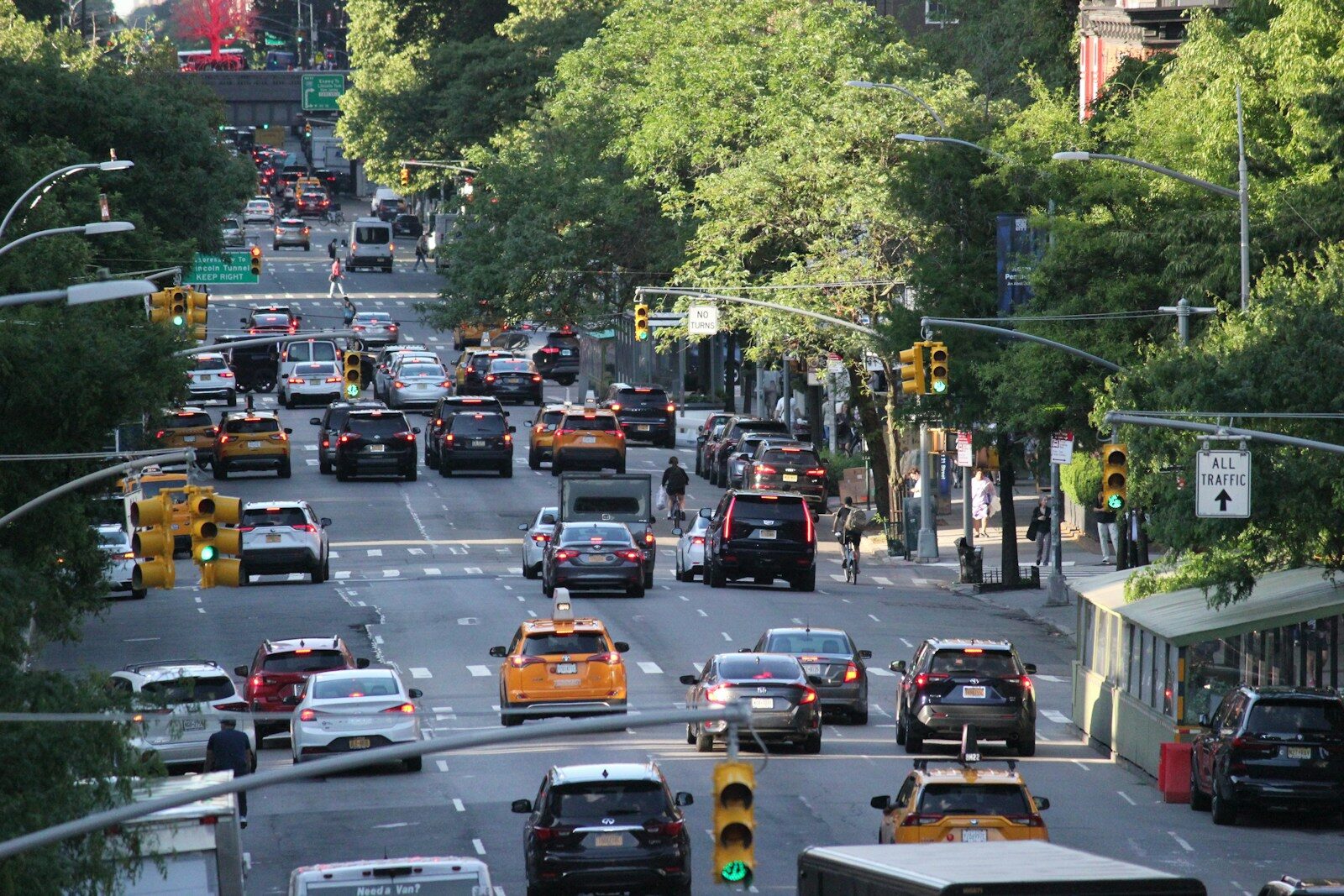
For most passenger vehicles with a valid E-ZPass:
- Peak toll: $9.
- Overnight toll: $2.25.
- Passenger vehicles are charged no more than once per day.
- Peak hours are 5 a.m. to 9 p.m. on weekdays.
- Weekend peak hours are 9 a.m. to 9 p.m.
- Overnight rates are 75% lower than the peak rate.
The official MTA Congestion Relief Zone toll page has the current toll calculator, zone map, crossing credits, discounts, exemptions, and vehicle rates.
Where the Congestion Relief Zone Starts
The Congestion Relief Zone covers local streets and avenues in Manhattan south of and including 60th Street.
That means Midtown and Lower Manhattan are inside the zone.
But several through routes are excluded when a vehicle stays on them.
The main excluded roads are:
- FDR Drive;
- West Street and the West Side Highway, also known as Route 9A;
- the Hugh L. Carey Tunnel connections to West Street.
If you leave an excluded roadway and enter local streets inside the zone, the congestion charge can apply.
That is why route details matter more than simply saying, “I drove below 60th Street.”
The $9 Toll Is the E-ZPass Peak Rate
The number most people hear is $9.
That is the peak passenger-vehicle rate with a valid E-ZPass.
Drivers without a properly billed E-ZPass pay more.
The current Tolls by Mail peak rate for a passenger vehicle is $13.50.
The overnight Tolls by Mail rate is $3.30.
If you already have E-ZPass, make sure the vehicle’s current license plate is correctly linked to the account. A removable E-ZPass toll-tag holder on Amazon can also make it easier to move or position the transponder correctly when you use more than one vehicle.
A small account mistake can turn a $9 trip into a more expensive bill.
The Toll Only Applies Once Per Day to Most Passenger Vehicles
Passenger cars, SUVs, pickup trucks, small vans, and motorcycles are generally charged only once per day for entering the zone.
That matters for someone who enters, leaves, and returns later.
You do not normally pay another passenger-vehicle congestion toll every time you cross the boundary again that day.
Taxis and for-hire vehicles work differently.
Taxis and Ride-Hail Trips Use Per-Trip Charges
Passengers in taxis, green cabs, black cars, and high-volume for-hire vehicles do not pay the normal $9 daily passenger-vehicle toll.
Instead, a smaller charge applies to qualifying trips to, from, within, or through the zone.
The current per-trip charges are:
- $0.75 for taxis, green cabs, and black cars;
- $1.50 for high-volume for-hire vehicles.
That makes the policy feel different for a tourist taking one taxi ride than for a commuter driving a personal car into Midtown.
Trucks Pay More
Commercial vehicles face higher rates because of their size and road impact.
With E-ZPass, the current peak rates include:
- small single-unit trucks and some buses: $14.40;
- large multi-unit trucks and tour buses: $21.60.
Overnight rates drop to $3.60 and $5.40 respectively.
For a delivery company, that toll becomes part of route planning and pricing.
It can also be offset partly by faster travel if the vehicle spends less time stuck in traffic.
Tunnel Credits Can Reduce the Charge
Some drivers entering the Congestion Relief Zone through already-tolled tunnels can receive a crossing credit during peak hours when using a valid E-ZPass.
The four qualifying entries are:
- Lincoln Tunnel;
- Holland Tunnel;
- Queens-Midtown Tunnel;
- Hugh L. Carey Tunnel.
The passenger-vehicle credit can be up to $3.
So a driver entering through one of those crossings may not pay the full $9 congestion charge on top of the tunnel toll.
Use the MTA calculator for the exact trip rather than trying to add the numbers from memory.
New Jersey Drivers Have a Different Commute Calculation
The Lincoln and Holland Tunnel credits matter especially to New Jersey commuters.
So do PATH, NJ Transit rail, commuter buses, and park-and-ride choices.
Our guide to New Jersey transit and MetLife-area travel shows how quickly transportation planning can change when a large event or Manhattan trip depends on rail, bus, parking, and transfer timing.
The same principle applies to a normal workday.
Compare the full trip, not just one toll.
The Low-Income Discount Can Matter for Frequent Drivers
New York has a Low-Income Discount Plan for eligible registered vehicle owners.
Eligibility can include:
- federal adjusted gross income of no more than $50,000 for the prior calendar year;
- enrollment in SNAP;
- enrollment in TANF;
- enrollment in WIC.
After the first 10 trips in the same calendar month, eligible drivers receive a 50% discount on later peak-period trips that month.
Overnight trips already receive the lower overnight rate, so the extra low-income discount does not apply to those tolls in the same way.
A $9 Toll Can Still Be a Real Household Expense
For a high-income commuter, $9 may be annoying.
For someone driving into the zone several days a week on a modest income, it can become a budget item.
Twenty peak entries at $9 would equal $180 before any credits or discounts.
That is why eligibility programs, employer commuter benefits, transit alternatives, and route timing matter.
Our guide to living on $22 an hour makes the same household-budget point in a broader way: recurring transportation costs deserve their own line, because small daily charges become real monthly money.
The First-Year Traffic Result Was Large
New York’s January 2026 first-year report said 27 million fewer vehicles entered the Congestion Relief Zone during the program’s first year.
That works out to more than 73,000 fewer vehicles on an average day.
Traffic entering the zone was down about 11%.
That is a meaningful change for a place where a small reduction in traffic can have a large effect on speed because roads were already near capacity.
Some Crossings Got Much Faster
The first-year report found faster travel at major crossings.
Morning rush-hour crossing speeds were up an average of about 23%.
Reported improvements included:
- Holland Tunnel: about 51% faster;
- Queensboro Bridge: about 29% faster;
- Williamsburg Bridge: about 28% faster;
- Lincoln Tunnel: about 25% faster;
- Queens-Midtown Tunnel: about 18% faster.
Those numbers are one reason some commercial drivers support parts of the program even though they pay a toll.
Time has a cost too.
Truck Speeds Improved Inside the Zone
New York reported truck speeds in the zone up about 5.6% compared with 2024.
That is not dramatic enough to erase every delivery toll.
But a business with many deliveries may care about driver hours, fuel use, missed appointments, and how many stops can be completed in one day.
The right business calculation is not “toll bad” or “speed good.”
It is the net cost of the route.
Transit Ridership Rose
State and MTA first-year reporting put overall transit ridership up about 7%.
That is part of the program’s design. The same idea appears in this practical guide to reducing car trips and using public transit, where small travel choices can lower fuel use and traffic at the household level.
The toll is supposed to reduce vehicle traffic and create a dedicated revenue stream for transit improvements.
For the policy to work long term, the transit side has to be useful enough that people can actually choose it.
The Program Brought in More Than $550 Million in Its First Year
New York reported more than $550 million in net first-year congestion-pricing revenue.
The original target was roughly $500 million in annual net revenue during the early phase.
The revenue supports financing for about $15 billion in MTA capital work.
Eligible projects include subway, bus, Long Island Rail Road, and Metro-North improvements.
The law directs most of the money toward New York City Transit, with portions going to the two commuter railroads.
This Is Capital Money, Not a Free Subway Fare Fund
Congestion pricing revenue is mainly tied to capital improvements.
Think elevators, signals, railcars, stations, infrastructure, and other long-lived investments.
It is not simply a pot of money used to eliminate fares or cover every day-to-day operating cost.
That distinction gets lost in political arguments.
The Program Also Changed Event Travel
A visitor driving into Manhattan now has to treat congestion pricing as part of the trip budget.
That became especially visible during the 2026 World Cup, when New York New Jersey hosted major matches and the final.
Our World Cup 2026 travel guide explains why transportation should be planned before lodging for large events in the New York region.
If your hotel is inside Manhattan and your event is in New Jersey, the cheapest-looking car plan can become the least convenient plan once parking, bridge or tunnel tolls, congestion pricing, and traffic are added.
The Legal Fight Is Still Active
Congestion pricing is operating today, but the federal court fight is not finished.
In February 2025, the U.S. Department of Transportation tried to terminate federal approval for the program.
New York and the MTA sued.
On March 3, 2026, U.S. District Judge Lewis Liman ruled that the federal government’s attempted termination was unlawful and arbitrary and capricious.
The court vacated the termination letters and restored the tolling agreement.
That is why the toll continued.
The Federal Government Appealed
The federal government filed an appeal in the U.S. Court of Appeals for the Second Circuit in May 2026.
As of September 2, that appeal is still pending.
The appellate schedule extends into September.
So the most accurate legal description is not “the fight is over.”
It is “the program is operating after a major district-court victory while the federal appeal continues.”
Another Appeals Court Rejected a County Challenge in July
Congestion pricing has faced more than one lawsuit.
Rockland and Orange Counties argued that the program unlawfully burdened their residents and raised constitutional claims.
On July 13, 2026, the Second Circuit upheld dismissal of those claims.
The court concluded that the program did not impose the kind of unconstitutional restriction on travel alleged by the counties.
That was a separate case from the federal government’s appeal.
Opponents Still Have Real Cost Concerns
The first-year traffic results do not erase every objection.
Opponents point to:
- commuters who have weak transit alternatives;
- New Jersey and outer-borough drivers;
- small businesses making service calls;
- delivery costs;
- workers traveling at hours when transit is less convenient;
- the principle of charging to enter a central part of a city.
Those concerns are part of the policy debate even when traffic falls.
Supporters Point to Measurable Results
Supporters now have a year of operating data instead of only forecasts.
They point to:
- 11% fewer vehicles entering the zone;
- faster bridges and tunnels;
- higher transit ridership;
- more than $550 million in net revenue;
- fewer crashes and injuries reported in the zone;
- lower pollution measurements in first-year state reporting.
The strongest argument for the program is no longer that it might reduce congestion.
It is that the first-year data says it did.
Environmental Claims Need Careful Reading
New York’s first-year announcement said pollution in the zone was down about 22% using the measures highlighted in its report.
It also reported lower greenhouse-gas emissions and fewer noise complaints.
Those are useful signals.
But air quality changes can be influenced by weather, fleet changes, construction, economic activity, and other factors too.
Longer-term independent study will help show how much of the improvement persists and how much can be attributed directly to congestion pricing.
The Current $9 Toll Is Not the Final Rate
The toll was intentionally phased in.
The current peak passenger-vehicle E-ZPass rate is $9 through 2027 under the adopted schedule.
The scheduled peak rate then rises to:
- $12 in 2028;
- $15 in 2031.
Other vehicle rates and credits rise proportionally under the phase-in.
That future schedule is important when deciding whether the program is affordable long term.
Do Not Build a 2030 Commute Around Today’s $9 Rate
A commuter making a long-term job or housing decision should not assume the current toll stays $9 forever.
The phase-in was part of the policy from the start.
If driving into the zone is essential to your work, include the scheduled higher tolls in your longer-term budget.
If transit is a realistic alternative, compare the full cost and time of both.
Parking Can Cost More Than the Toll
The congestion charge gets the headlines because it is new.
But Manhattan parking can easily cost several times more than $9.
So can bridge and tunnel tolls, fuel, and the value of time spent driving.
When deciding whether to drive, compare the full trip:
- congestion toll;
- bridge or tunnel toll;
- parking;
- fuel;
- time;
- transit fare for the alternative trip.
A $9 toll may be the smallest part of the driving cost.
For Some Trips, Overnight Entry Is a Big Difference
The overnight passenger-vehicle E-ZPass rate is only $2.25.
That is 75% below the peak rate.
If your schedule is flexible, the time of entry can materially change the cost.
That does not mean everybody should rearrange work around a toll.
It does mean an occasional traveler should check the clock before assuming every Manhattan entry costs $9.
What I Would Check Before Driving Into Manhattan
I would make the decision in this order:
- Is the destination inside the Congestion Relief Zone?
- Can I stay entirely on an excluded roadway?
- Am I entering during peak or overnight hours?
- Is my E-ZPass account and plate information correct?
- Do I qualify for a crossing credit?
- Do I qualify for a low-income discount or exemption?
- What will parking cost?
- Is train, subway, bus, ferry, or PATH faster or cheaper?
That takes a few minutes.
It is better than learning the answer after the bill arrives.
The First Year Changed the Argument
Before January 2025, the argument was mostly about forecasts.
Would drivers avoid the zone?
Would traffic move faster?
Would transit ridership rise?
Would the program produce enough revenue?
After the first year, we have actual numbers.
Traffic fell.
Crossing speeds improved.
Transit use increased.
Revenue beat the early target.
That does not settle the fairness debate or the legal appeal.
It does make the conversation more concrete.
The Cameras Are Still On
As of September 2026, congestion pricing remains part of everyday New York travel.
For a passenger car with E-ZPass, the basic peak number is still $9.
For the city, the larger numbers are 27 million fewer vehicle entries and more than $550 million in first-year net revenue.
For the courts, the major March ruling favored New York, while the federal appeal remains pending.
The policy is working well enough to produce measurable traffic changes and controversial enough to remain one of the country’s most closely watched transportation fights.
If you drive into Manhattan, the practical advice is simple.
Know the zone. Know the time. Keep E-ZPass current. Check credits and discounts. Compare transit before you leave.
The politics can stay complicated.
Your trip does not have to be.