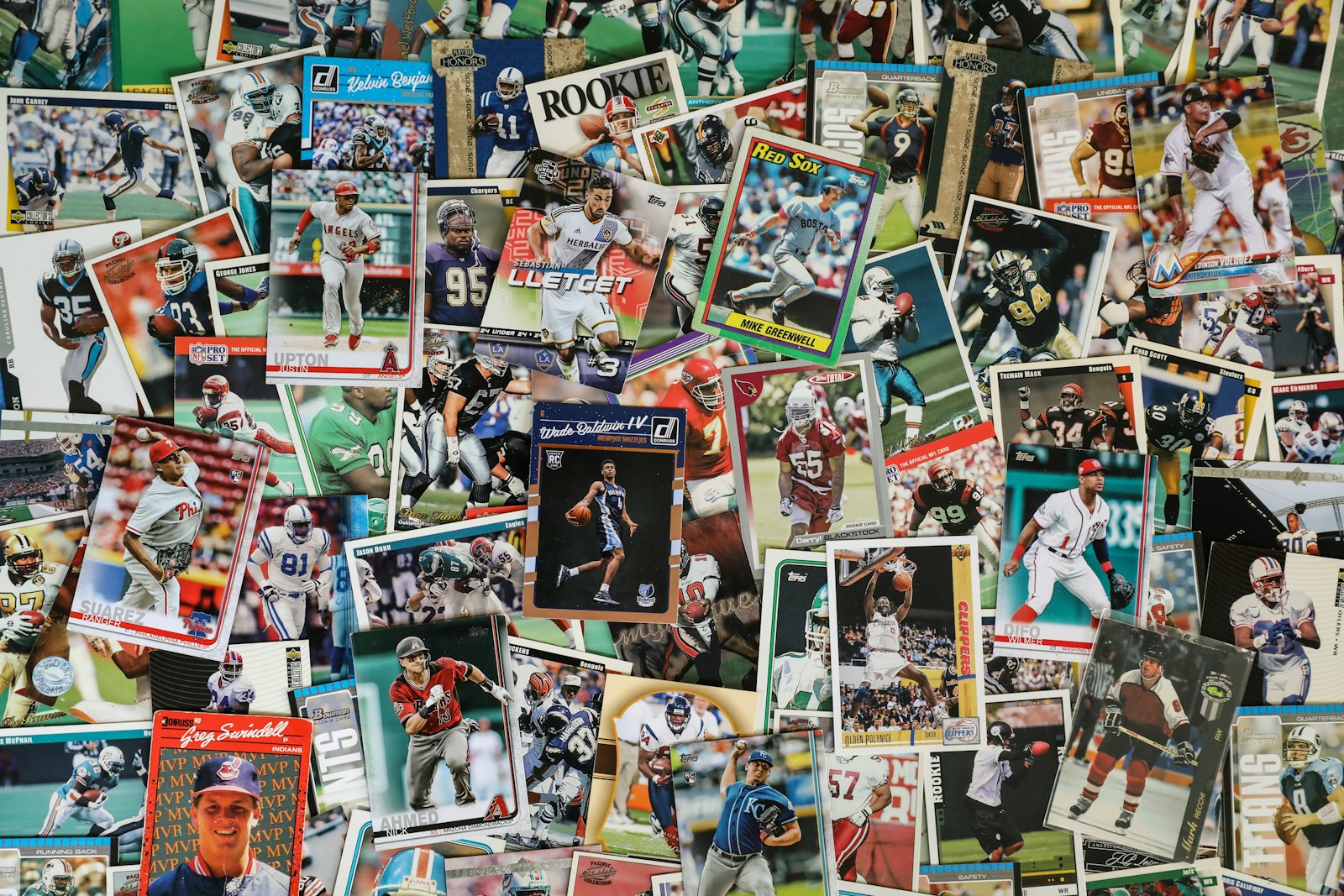
Selling sports cards looks easy until we have a box on the table and no idea which cards deserve a single listing, which belong in a lot, which might be worth grading, and which are barely worth the postage. The best approach is not to list everything one card at a time. It is to sort first, research actual sales, choose the right selling channel, and know your costs before setting a price.
This guide is built for ordinary collectors, not full-time dealers. We will focus on the parts that protect both value and time: identifying the card correctly, judging condition honestly, using recent sold comparables, deciding whether grading makes financial sense, photographing flaws, understanding fees, packaging safely, and keeping records.
Start by Sorting for Value, Not Just by Sport
A giant unsorted box hides both valuable cards and time traps. Make a first pass before researching individual prices.
- Potential premium cards: key rookies, stars, Hall of Fame players, scarce parallels, serial-numbered cards, autographs, memorabilia cards, vintage stars, short prints, and unusual inserts.
- Mid-tier singles: recognizable players and desirable sets that may be worth listing individually.
- Low-value cards: cards that may make more sense in player, team, set, or bulk lots.
- Damaged cards: creased, stained, torn, heavily worn, or otherwise impaired cards that need to be separated so condition is not overlooked.
Do not assume every rookie card is valuable. Modern sets can contain many rookie variations, parallels, inserts, and mass-produced base cards. Exact identification matters.
Identify the Exact Card Before Pricing It
A price comparison is useful only when the comparison is truly the same card.
- Year.
- Manufacturer and set.
- Player.
- Card number.
- Parallel or color variation.
- Serial numbering, if any.
- Autograph or memorabilia feature.
- Rookie designation where relevant.
- Grading company and grade if the card is slabbed.
Two cards with nearly identical photos can have very different print runs and values. A base card, refractor, numbered parallel, short print, and autograph version should not be priced from the same sales.
Use Sold Prices, Not Wishful Asking Prices
An unsold listing tells us what a seller hopes to receive. A completed sale tells us what a buyer actually paid.
The eBay Seller Center trading-card guide emphasizes condition, value, trust, clear images, and accurate card details. That same discipline should guide pricing: compare recent sales of the same card in a similar condition or grade.
One sale can be an outlier. Look for several recent transactions when possible. A card that sold once for $200 but normally sells around $90 should not automatically become a $200 card.
Condition Can Matter as Much as the Player
Condition is one of the biggest reasons two copies of the same card sell for different amounts.
- Check corners for whitening, rounding, bends, and dings.
- Check edges for chipping and rough cuts.
- Look across the surface under angled light for scratches, dimples, print lines, dents, stains, or indentations.
- Inspect the back as carefully as the front.
- Look for creases and wrinkles.
- Consider centering, especially when grading may be an option.
Do not hide flaws through selective photography. A disappointed buyer is more costly than an honest condition description.
Raw and Graded Cards Are Different Markets
An ungraded card is commonly called raw. A graded card has been evaluated by a third-party grading service and encapsulated with a grade or authentication label.
Grading can increase buyer confidence and can create a large price premium for cards that receive high grades. It can also cost money, take time, and produce a lower grade than the seller hoped for.
That means “valuable card = grade it” is not a reliable rule.
Do the Grading Math Before You Submit
Before grading, compare at least three numbers:
- What similar raw copies actually sell for.
- What realistic grades sell for, not only the highest possible grade.
- The total grading cost, including service fee, shipping, insurance, supplies, and the time your card will be unavailable.
Grading companies change service levels, prices, insured-value limits, and turnaround estimates. Check the company directly before submitting rather than relying on an old blog post or screenshot.
A useful question is not “What is this worth as a perfect grade?” It is “What is the expected value across the grades this card could realistically receive?”
Do Not Call a Raw Card “Gem Mint” Like It Has Been Graded
Sellers often use optimistic condition language. That can create problems when subjective claims sound like professional grades.
If a card has not been graded, describe what you can actually see. Show the corners. Show the surface. Show the back. Let the buyer evaluate the photographs.
Marketplace condition categories should be used according to that platform’s current rules.
Choose the Selling Channel Based on the Card
No single marketplace is best for every card.
Large Online Marketplaces
Large marketplaces offer a broad buyer pool and searchable sales history. They also charge fees and require sellers to follow detailed listing, shipping, payment, and return rules.
They are often a good starting point for cards with established demand because buyers can compare many copies quickly.
Consignment
A consignment company can photograph, list, sell, and ship cards for you. The trade-off is that the service takes a portion of the sale and controls more of the process.
Consignment can make sense when the seller has valuable cards but does not want to build an online reputation, photograph hundreds of items, answer messages, or handle shipping.
Local Card Shops
A shop may offer immediate cash or trade credit. Expect the offer to be below expected retail because the store needs room for overhead, market risk, and profit.
The convenience can still be worth it when the goal is speed rather than maximum gross price.
Card Shows
Shows can be useful for collections because buyers can inspect cards in person and negotiate lots. Sellers should account for admission, table fees if they are vending, travel, time, and security.
Specialty Collectible Shops
Some buyers enjoy stores where cards sit beside games, movies, comics, and other collectibles. Our article on Entertainment Mart and physical collectible shopping looks at why in-person browsing still matters even in an online marketplace.
Know the Fees Before You Set the Price
The sale price is not the same as the money you keep.
- Marketplace fee.
- Payment or transaction costs where applicable.
- Promoted-listing or advertising costs if used.
- Shipping label.
- Packaging supplies.
- Insurance or signature service for higher-value shipments.
- Grading or authentication cost if you paid it.
- Your original cost in the card.
Marketplace fee schedules can change and may vary by subscription level, category, price, and country. Verify the current fee table before calculating profit.
Auction or Fixed Price?
An auction can work well when a card has strong current demand and enough interested buyers to compete. A rare card with no recent comparable sales can also benefit from broad exposure when the seller is comfortable letting the market decide.
The risk is obvious: an auction can end below expectations if the timing, title, photographs, bidder pool, or demand are weak.
A fixed price can be better when recent sales establish a stable range and the seller is willing to wait. Best Offer features can provide room to negotiate.
Do Not Assume an Athlete’s Big Week Creates Permanent Value
Sports-card prices can react quickly to call-ups, championships, record chases, trades, injuries, retirements, award announcements, and viral performances.
That does not mean the new price will last. A short burst of attention can disappear when the news cycle moves on.
The same caution helps when we talk about player legacy. Our guide to GOAT debates in sports explains why one hot stretch or one title is only part of a career. Card markets can be even more reactive than historical sports debates.
Good Photos Reduce Disputes
Take clear photographs of the exact card being sold unless the marketplace explicitly allows another format for the listing.
- Front.
- Back.
- Corners.
- Edges when wear is present.
- Surface flaws that can be photographed.
- Serial number.
- Autograph.
- Grading label and certification number on slabbed cards.
Use enough light to show the card without creating glare that hides the surface. Do not digitally remove scratches, stains, print defects, or edge wear.
Write Titles for Identification, Not Hype
A useful title usually includes the details a collector would search for: year, set, player, card number, important parallel, serial number where useful, rookie designation if accurate, autograph designation, and grade for a graded card.
Avoid filling the title with unsupported words such as “investment,” “guaranteed gem,” “rare” when the card is not scarce, or “one of a kind” when many copies exist.
Describe Flaws Before the Buyer Finds Them
Condition disputes often begin with information that should have been visible before purchase.
If there is a crease, dent, print line, soft corner, wax stain, surface scratch, or chipped edge, disclose it. Buyers can decide whether the flaw is acceptable.
That may reduce the selling price. It can also reduce returns and protect seller trust.
Lots Save Time on Lower-Value Cards
Listing a $1 card individually can make little economic sense after photography, data entry, messages, packaging, and shipping.
Lots can group cards by:
- Player.
- Team.
- Set.
- Year.
- Rookies.
- Inserts.
- Parallels.
- Sport.
A child starting a collection may enjoy a well-built player or team lot more than one expensive card. For another practical look at introducing young people to outdoor hobbies, Noah’s Outdoors offers beginner-friendly outdoor guidance. Our guide to sports gifts for 8-year-olds explains why cards can be a fun hobby gift when adults keep the focus on collecting rather than promises of easy profit.
Pack Cards So Movement Cannot Damage Them
The exact shipping method depends on card value, quantity, marketplace rules, carrier service, and buyer location. The basic goal is stable protection from bending, moisture, impact, and movement.
- Use an appropriate soft sleeve and rigid card holder where suitable.
- Add a rigid holder or other protection appropriate to the card.
- Keep the card from sliding out of the holder.
- Use stiff support or protective packaging where bending is a risk.
- Protect slabs from scratching and impact.
- Use a shipping service that meets the marketplace’s tracking requirements.
- Consider insurance or signature services when the value justifies them.
Do not tape directly across a card or use packing methods that force the buyer to put a blade close to the collectible.
Use the Platform’s Payment and Messaging System
A buyer asking to move payment or communication off-platform can remove protections that both sides expect from the marketplace.
Follow the selling site’s rules for payment, shipping address, tracking, returns, authentication, and dispute handling. Do not accept an unusual payment method merely because someone promises a faster or higher price.
High-Value Cards Need More Documentation
As card value rises, document more of the transaction.
- Save listing photographs.
- Record the serial or certification number.
- Keep proof of shipment.
- Follow authentication-program requirements when they apply.
- Use appropriate insurance.
- Keep purchase and grading records.
For extremely valuable cards, consider whether a major auction house, specialty consignment service, or established dealer offers a better risk profile than a casual direct sale.
Mystery Packs and Breaks Bring Extra Rules and Risk
Mystery products, randomized packs, and group breaks can raise platform-policy, consumer-protection, disclosure, and sometimes gambling-related questions depending on how they are structured and where they are sold.
Do not assume that saying “odds posted” makes every format acceptable. Check the marketplace’s current rules and the law that applies to your location before selling randomized products.
For a beginner, straightforward singles and clearly described lots are much simpler.
Keep Records From the First Sale
Track enough information to know whether selling is actually profitable.
- Card or lot description.
- Date acquired.
- Purchase cost where known.
- Grading and authentication costs.
- Sale date.
- Gross sale price.
- Marketplace fees.
- Shipping and packaging costs.
- Refunds or returns.
- Net proceeds.
Tax treatment depends on the seller’s facts and jurisdiction. Do not rely on a hobby forum or an old payment-reporting threshold as tax advice. Keep records and use current official guidance or a qualified tax professional when needed.
Do Not Confuse Revenue With Profit
Selling $5,000 of cards does not mean earning $5,000.
If the cards cost $3,000, grading cost $500, marketplace fees were $600, and shipping and supplies cost another $300, the economics look very different from the headline revenue.
This is why recordkeeping matters before a collection turns into a side business.
Selling Fast Usually Means Accepting Less
There is a trade-off between speed and maximum price.
- Fastest: sell an entire collection or large portion to a dealer, shop, or experienced buyer.
- Middle: separate the better cards and sell the rest in lots.
- Highest potential gross: research, photograph, and sell valuable cards individually over time.
The third option may produce more gross revenue while consuming far more hours. Put a value on your time too.
A Practical First-Weekend Plan
If the collection has been sitting untouched, start small.
- Sort one box rather than the entire collection.
- Pull 20 cards that appear most promising.
- Identify each card exactly.
- Research several recent sold comparables.
- Choose five to ten cards worth listing individually.
- Photograph the exact cards clearly.
- Calculate fees and shipping before setting prices.
- Build one or two lots from lower-value cards.
- Package the first sale carefully and save tracking.
- Record the final net amount after fees and shipping.
After that first cycle, the collection becomes much easier to understand.
Sell the Card You Actually Have
The strongest sports-card sellers do not need louder descriptions. They need accurate ones.
Identify the card correctly. Compare real sales. Describe the real condition. Show the real flaws. Grade only when the economics and condition justify it. Know the fees. Use secure marketplace procedures. Pack the card so it arrives in the condition the buyer expected.
That process is less exciting than chasing every hot rookie or guessing which card will triple next month. It is also much more dependable. In a hobby built on condition and trust, a clean transaction is worth more than hype.