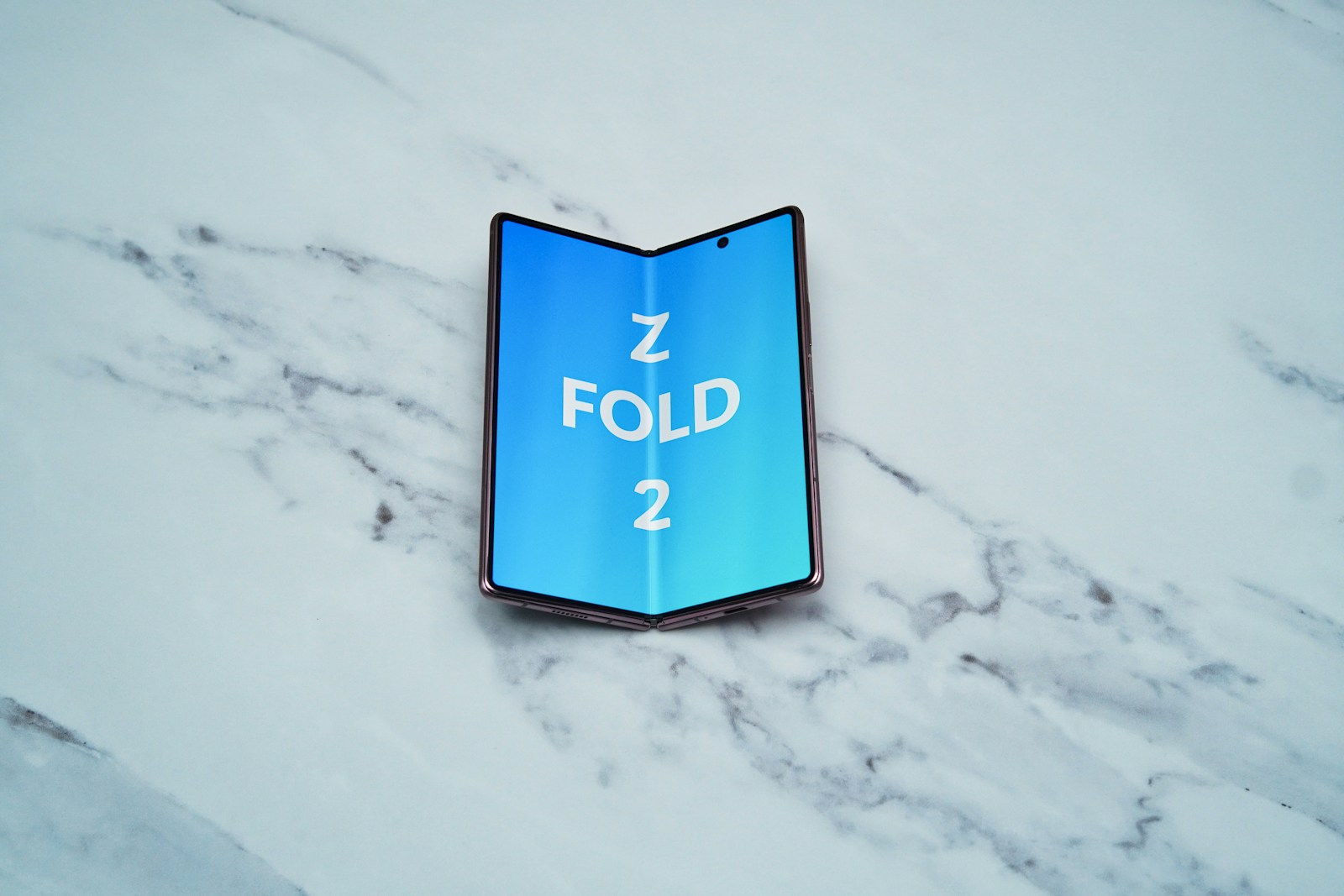
Galaxy Z Fold7 and Galaxy Z Flip7 were major steps for Samsung’s foldable phones in 2025. Fold7 became much thinner and lighter, while Flip7 gained a larger cover display, a bigger battery, and a more useful closed-phone experience. Those improvements were real.
But the buying question changed in August 2026. Samsung has now released Galaxy Z Fold8 Ultra, Galaxy Z Fold8, and Galaxy Z Flip8. That means Fold7 and Flip7 should no longer be judged as the newest foldables. They should be judged as previous-generation phones that may still make sense when the price, condition, warranty, and features line up with what you need.
Fold7 Was the Model That Finally Cut the Bulk
The physical change was the headline. Galaxy Z Fold7 measures about 8.9 mm when folded, 4.2 mm when open, and weighs 215 grams. That is a very different feel from early Galaxy Fold models that could seem thick and heavy even before a case was added.
The official Samsung Galaxy Z Fold7 specifications list an 8.0-inch inner display and a 6.5-inch cover display. The cover screen also moved closer to the proportions of a normal smartphone, which made it easier to type, browse, read messages, and use maps without unfolding the device every few minutes.
That matters more than it sounds. A foldable works best when opening it is a choice, not a requirement. Fold7 made the outside screen useful enough for ordinary phone tasks while keeping the large inner display ready for reading, planning, editing, and multitasking.
The 8-Inch Inner Screen Is Still the Main Reason to Buy a Fold
A foldable book-style phone still has one advantage a normal slab phone cannot copy: it can turn into a small tablet without requiring a second device.
On Fold7, that extra width is useful for two-app layouts, email beside a calendar, maps beside travel notes, a browser beside a document, or a video beside messaging. Some people will never use those layouts. Others quickly stop wanting to work on a narrow screen.
The trade-off is simple. You carry a more complex phone in return for a much larger workspace when you need it.
Fold7’s 200MP Main Camera Was a Real Upgrade
Fold7 became the first Galaxy Z Fold with a 200MP main camera. That brought the camera system closer to Samsung’s premium nonfolding phones.
Megapixels alone do not determine image quality. Lens quality, sensor size, processing, stabilization, shutter speed, lighting, and focus all matter. Still, the stronger main camera gave Fold7 more room for cropping and detail than earlier Fold models.
If cameras are your top priority, compare the exact Fold model against current flagship phones rather than assuming the most expensive foldable must also have the best camera system. Our look at iPhone 17 and iPhone Air makes the same point from Apple’s side: phone families now separate design-first, balanced, and camera-first buyers more clearly than they used to.
Flip7 Improved the Small-Foldable Formula
Galaxy Z Flip7 takes a different approach. Instead of opening into a tablet, it folds a full-size phone into a shorter shape that is easier to fit into a pocket or small bag.
Samsung gave Flip7 a 6.9-inch main display and a 4.1-inch cover display. It measures about 13.7 mm when folded, 6.5 mm when open, and weighs 188 grams. The battery increased to 4,300mAh, which addressed one of the most common complaints about older compact foldables.
The 4.1-inch cover display is especially important. A flip phone becomes much more practical when you can check notifications, control music, look at timers, see calendar information, use navigation information, or handle short interactions without opening the main screen.
Flex Mode Is More Than a Gimmick
Flip7 can sit partially open on a desk or table. That lets the hinge act like a built-in stand.
- Use the rear camera for hands-free group pictures.
- Record a time-lapse without carrying a tripod.
- Keep a video call standing upright on a desk.
- Follow a recipe while keeping both hands free.
- Frame a selfie with the cover screen while using the rear camera.
These are small advantages, but they come directly from the folding hardware rather than from software that could be copied onto any phone.
IP48 Does Not Mean Dustproof
The old article correctly worried about dust, but it described the issue too vaguely. Fold7 and Flip7 carry an IP48 rating.
The second digit, 8, represents strong water-ingress protection under the test conditions used for the rating. The first digit, 4, is the key limitation. It means protection against solid objects larger than about 1 millimeter. It does not mean the phone is dust-tight.
Fine sand and dust therefore deserve more caution than they would with an IP68 slab phone. A beach, dusty greenhouse, workshop, construction area, or farm environment is not the place to repeatedly open a foldable with grit blowing across the inner screen and hinge.
Do Not Add a Second Inner Screen Protector Yourself
The inner folding display is different from a normal glass phone screen. Samsung installs a protective layer designed for the folding panel.
Avoid pressing hard with fingernails or sharp objects. Do not peel the factory layer casually, and do not assume a generic tempered-glass protector belongs on the folding display. If the factory protector lifts, bubbles, or becomes damaged, follow Samsung service guidance instead of experimenting with adhesives.
Seven Years of Software Support Helps Older Models Age Better
Samsung promised seven generations of operating-system upgrades and seven years of security updates for the Fold7 and Flip7 generation. That matters in 2026 because buying the previous model does not automatically mean buying a phone near the end of its software life.
Software support cannot stop a battery from aging or a hinge from wearing, but it reduces one major reason older premium phones become obsolete.
Flip7 Also Added Samsung DeX
Flip7 supports Samsung DeX, letting the phone drive a desktop-style interface on a compatible external display. That is a meaningful change for a compact foldable. If you travel with your phone as a wallet too, this guide to using a phone with New York’s OMNY fare system is a useful example of how much daily travel can depend on one charged device.
It will not replace a laptop for everyone. But for email, browser work, cloud documents, presentations, remote access, and light office tasks, DeX can make one phone more flexible when you travel.
Network Quality Still Matters More Than a Premium Phone
A Fold7 or Flip7 can have excellent radios and still feel unreliable when the carrier signal, Wi-Fi network, router, congestion, or handoff between cells is the real problem.
That is worth remembering before replacing a phone because calls or data occasionally drop. Our guide to brief internet dropouts and how to diagnose them explains how to separate a device problem from a network problem before spending money.
Fold8 Changes the Value Question
Samsung launched Galaxy Z Fold8 Ultra, Fold8, and Flip8 in August 2026. That makes the seventh-generation devices previous models.
That is not automatically bad. Previous-generation flagships can become attractive when discounts are large enough. What no longer makes sense is paying nearly the same price for Fold7 or Flip7 that you would pay for the newer line without comparing them first.
If Fold7 is substantially cheaper and you prefer its larger book-style screen, 200MP camera, mature software, and long support window, the older model can still be reasonable. If the price gap is small, the newer Fold8 family deserves a close look because you are buying one generation later in hardware and support life.
Used and Refurbished Foldables Need Extra Inspection
A used foldable deserves more inspection than a used slab phone because the hinge and inner display are moving parts. A well-fitted Galaxy Z Fold7 protective case can also help protect the frame from everyday bumps, though no case removes the need to treat the hinge and inner screen carefully.
- Open and close the phone several times and listen for grinding or unusual resistance.
- Check that the phone opens to its intended position.
- Look for bubbles, lifting, dead pixels, bright lines, or pressure damage on the inner screen.
- Inspect the hinge and frame for evidence of hard drops.
- Check battery condition where possible.
- Confirm the device is not carrier-blocked or activation-locked.
- Verify warranty or refurbisher coverage in writing.
Carrier compatibility should also be verified with the exact model number rather than old GSM-versus-CDMA labels. Our guide to Verizon, GSM, CDMA, LTE, and modern phone compatibility explains why the older terminology can mislead buyers today.
Who Fold7 Still Fits
- You regularly use two apps at once.
- You read documents, maps, websites, comics, or spreadsheets on your phone.
- You want a small-tablet experience without carrying a second device.
- You find a strong previous-generation discount.
- You are comfortable treating the inner display and hinge with more care than a normal slab phone.
Who Flip7 Still Fits
- You want a full-size phone that folds into a shorter pocket shape.
- You like taking hands-free photos and videos.
- You value a large cover display for quick tasks.
- You want Samsung DeX in a compact foldable.
- You find the Flip7 at a meaningful discount versus Flip8.
Who Should Probably Choose Something Else
A foldable is not automatically the best premium phone. If your work regularly involves fine dust, sand, metal particles, or rough handling, an IP68 slab phone may still be the easier tool to live with.
If maximum battery life is your only priority, compare measured battery tests rather than assuming the most expensive model wins. If camera zoom is your main concern, compare the exact lenses. If you rarely multitask and never use the folding position, you may be paying for hardware that does not improve your day.
The Seventh Generation Was the Turning Point, Not the Finish Line
Fold7 and Flip7 were important because they removed some of the friction that kept foldables feeling experimental. Fold7 became dramatically thinner and lighter. Flip7 made its outer screen more useful and improved battery capacity. Both kept the flexible form factor while moving closer to normal flagship-phone expectations.
But “finally ready” does not mean “perfect.” IP48 is still not dust-tight. Inner displays still need more care than ordinary phone glass. Repairs can be expensive. And the 2026 Fold8 generation has already moved the category forward again.
That leaves Fold7 and Flip7 in a healthy place: no longer the future and no longer the newest, but mature previous-generation foldables that can still be good tools when the price reflects their age.