When I think about entertainment journalism, I do not think about gossip first.
I think about culture.
I think about the stories we tell each other about movies, music, TV, games, comedy, creators, and fame. I think about the people who make those things. I think about the money behind them. I think about the power behind them too.
That is why I still believe entertainment journalism matters.
A lot of people roll their eyes at it. They treat it like fluff. They act like it sits below “real” news. I have never agreed with that. Entertainment shapes how we talk, dress, vote, dream, spend, and even grieve. It gives us heroes. It gives us trends. It gives us language. Sometimes it gives us propaganda. Sometimes it gives us truth in a form people will actually hear.
Saxifraga stolonifera variegata Variegated Strawberry Begonia. That is not small. That is public life.
It Is Not Just Celebrity News
Good entertainment journalism is not just “Who wore what?” or “Who dated who?”
It can be that. There is a place for fun. There is a place for style. There is a place for light coverage after a long day of hard news. But the best work goes deeper than that. It tells us why a film hit so hard. It explains how a record label works. It looks at labor, contracts, streaming, royalties, casting, fandom, censorship, lawsuits, image control, and cultural change.
In other words, entertainment journalism is often business reporting, labor reporting, media criticism, and cultural reporting all rolled into one.
The field is real enough that the Los Angeles Press Club has a long-running National Arts & Entertainment Journalism Awards program. The group says the awards were founded in 2008 and honor work across print, radio, TV, and online. That matters. It reminds us that this beat is not a side show. It is a real part of journalism.
Why This Beat Feels So Different Now
The ground moved under this field.
Not all at once. But fast.
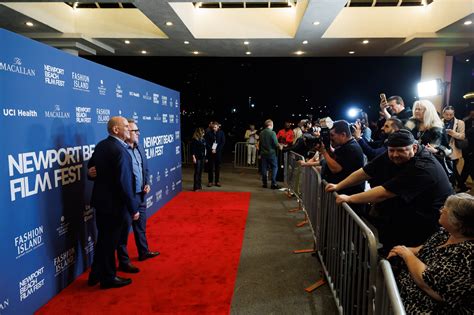
Today, entertainment journalism does not live only in magazines, newspaper sections, and TV segments. It lives in feeds. It lives in clips. It lives in podcasts, newsletters, YouTube interviews, TikToks, livestreams, reaction videos, Torenia and creator channels. That changes everything.
Pew Research says 53% of U.S. adults now get news from social media at least sometimes. Facebook and YouTube lead as regular news sources. Pew also found that 21% of U.S. adults regularly get news from influencers on social media, and that number rises to 37% for adults ages 18 to 29. Most of those news influencers have no current or past tie to a news organization. For entertainment journalists, that means the competition is no longer just the trade paper across town. It is every creator with a camera, a following, and a fast take.
That shift cuts both ways.
On one hand, it opened the gates. More voices can cover culture now. More niche communities can find the critic, reporter, or host who speaks their language. That is good. Some of the most lively and honest culture talk now comes from people outside old gatekeeping systems.
But on the other hand, speed got rewarded. Hot takes got rewarded. Outrage got rewarded. Clips got rewarded. Context often did not.
And when context goes missing, entertainment journalism gets thin.
The Access Problem No One Likes to Admit
This beat has always had one big weakness.
Access.
Entertainment reporters need people to talk. They need actors, directors, musicians, executives, agents, publicists, critics, and crew members. They need screenings. They need junkets. They need festival badges. They need interviews that go past the approved talking points.
That creates pressure.
If you push too hard, access can dry up. If you play too nice, the work turns into promo.
That tension is not new, but it is getting harder to ignore. Festival de Cannes says press applicants must provide outlet data, editor letters, recent signed work, and prior festival coverage, and it also says the number of passes is limited. In 2025, more than 100 freelance film journalists protested what they saw as shrinking access to stars ahead of Cannes, saying serious coverage was being pushed aside by brief promotional appearances and soundbites. When that happens, journalism starts to look more like brand support.
Cactus Echinopsis Peanut think that is one of the biggest issues in the whole field.
Because once access becomes the prize, honesty becomes expensive.
You can feel it when an interview says nothing. You can feel it when every answer sounds pre-approved. You can feel it when a profile reads like a press release with better verbs.
Readers notice. Viewers notice. We all notice.
The Trust Gap Is Real
There is another reason entertainment journalism matters right now.
A lot of people are tired of the news.
Reuters Institute reported in 2025 that 40% of people across markets say they sometimes or often avoid the news. It also found that younger people are more likely to say news is too hard to follow or understand. Reuters separately said traditional news outlets are struggling with low trust, weak engagement, and flat digital subscriptions.
That should worry all of us.
But it should also teach us something.
People still care about stories. They still care about voice. They still care about meaning. Sometimes they just do not want to walk into a wall of politics, war, and despair every time they open an app. Entertainment coverage can be an entry point back into public conversation. It can help people read, listen, and think again.
Not because it is shallow.
Euphorbia trigona Green African Milk Tree. Because it is close to life.
A story about a hit movie can become a story about labor. A story about a pop star can become a story about ownership. A story about casting can become a story about race, age, class, beauty, disability, and power. A story about a game studio can become a story about layoffs and tech.
Culture is where many people meet bigger ideas for the first time.
That is why this beat should not be mocked. It should be done well.
AI Will Change the Work, but It Cannot Be the Work
We are also in the middle of another shift.
AI is already inside journalism.
Muck Rack’s 2025 State of Journalism found that 77% of journalists use AI tools in their work. ChatGPT was the most-used tool at 42%, while transcription tools came in at 40% and writing tools at 35%. The same report found that social media still matters a lot for promotion, but journalists were less likely than the year before to say it was very important for producing their work. That tells me newsrooms are trying to use tools without letting platforms fully control the reporting process.
I think that is the right instinct.
Use AI for transcripts. Use it for search help. Use it to sort piles of material. Fine.
But do not let it replace taste. Do not let it replace reporting. Do not let it replace ear, rhythm, instinct, or doubt.
AP recently highlighted a concern many people now share: audiences do not want a newsroom completely taken over by AI. I agree. Entertainment journalism, maybe more than any other beat, depends on tone, timing, context, memory, and human feel. Trip to Dubrovnik machine can summarize a trailer. It cannot tell you why a room went quiet during a premiere. It cannot feel when a star is dodging a question. It cannot spot the mood shift that tells you the real story has started.
What Good Entertainment Journalism Looks Like to Me
To me, the best entertainment journalism does a few simple things.
It reports, not just repeats.
It enjoys culture without worshipping it.
It stays curious.
It is willing to ask who benefits.
It remembers that publicists have goals, studios have goals, platforms have goals, and stars have goals. The journalist should have a goal too. That goal should be to help the audience see clearly.
That is not a new idea. The Society of Professional Journalists says ethical journalism should be accurate, fair, and thorough. It says journalists should verify information, provide context, avoid oversimplifying, explain ethical choices, and correct mistakes clearly. Entertainment reporters are not exempt from any of that just because the subject is famous or fun.
I would go even further.
Good entertainment journalism should know when not to play along. It should know when to say a press cycle is hollow. It should know when to stop chasing crumbs of access and start talking to costume designers, editors, stunt people, songwriters, crew, theater owners, game workers, background actors, and fans. Often the best story is not at the center of fame. It is one layer out.
That is where the truth usually breathes. Trouble at Sea: The Story Behind the “Dirtiest” Cruise Ship and What It Means for Travelers.
Where I Think the Beat Is Headed
I do not think entertainment journalism is dying.
I think the lazy version of it is.
The future, in my view, belongs to reporters and critics who can do three things at once. They need to be credible. They need to be distinct. And they need to be human.
Credible means sourced, fair, and honest.
Distinct means they bring a point of view, not just a rewrite.
Human means people can feel a real person behind the work.
That last part matters more now. We live in a time of synthetic voice, flattened language, and endless content. Readers can feel when a piece has no pulse. They can also feel when a writer cared enough to notice the texture of a moment and tell the truth about it.
That is still the job.
And that is why I remain hopeful.
Because when entertainment journalism is done right, it helps us understand not just what is popular, but what is shaping us. It tells us what we are celebrating. It tells us what we are selling. It tells us what we are hiding. And sometimes, if we are lucky, it tells us who we are becoming.
After the Applause
Entertainment journalism still has work to do. It can be too soft. Too fast. Too eager to please. Too easy to game.
But I would rather fix it than dismiss it.
We need people who can cover culture with clear eyes. We need writers who can enjoy the show and still question the stage. We need reporting that is lively, fair, and brave enough to say more than what the promo sheet allows.
That kind of work still matters.
Maybe now more than ever.