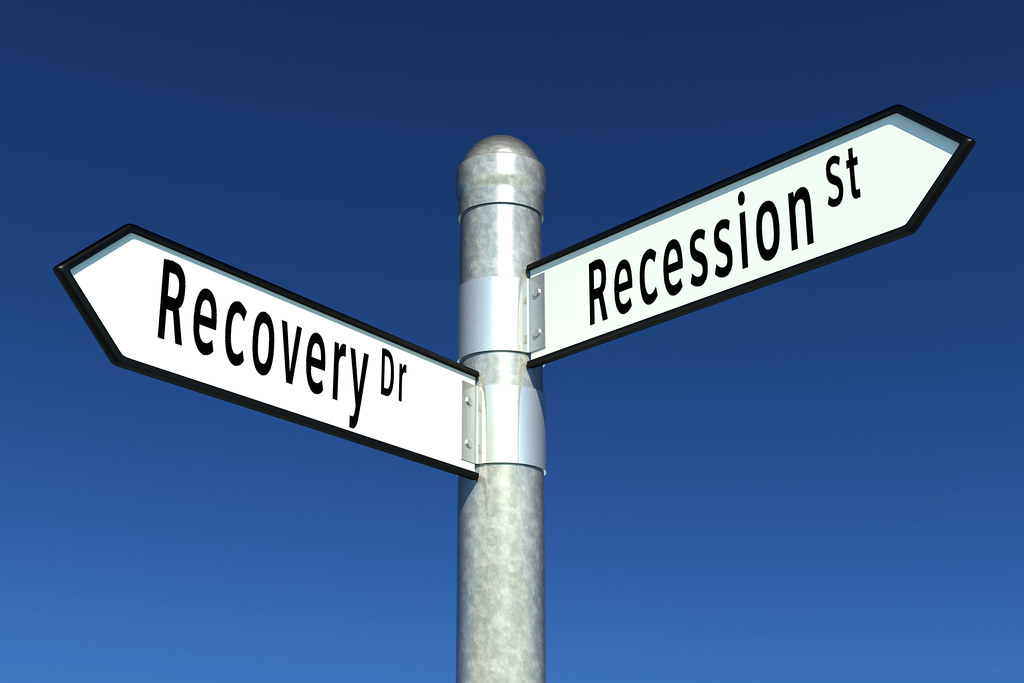
In the summer of 2022, Americans heard a simple argument repeated everywhere: real GDP had fallen for two consecutive quarters, so the United States must be in a recession. Politicians immediately fought over the label. The debate was louder than the underlying economics.
Looking back, the useful question is not which party won the talking point. It is how economists actually decide whether a recession has occurred, and why a popular rule of thumb can differ from the formal U.S. business-cycle record.
Why Two Negative Quarters Did Not Settle It
Two consecutive quarters of declining real GDP are often used as a shorthand definition of recession. It is a useful warning sign, but it is not the official U.S. dating method. The National Bureau of Economic Research Business Cycle Dating Committee examines a broader group of indicators and describes a recession as a significant decline in economic activity that is spread across the economy and lasts more than a few months.
That distinction mattered in 2022 because GDP contracted while the labor market remained comparatively strong. The mixed picture gave politicians room to emphasize whichever statistic best supported their argument. Our guide to how governments respond to recessions explains why the label can also influence expectations about policy.
Politics Made the Definition Sound Simpler Than It Was
Republicans had an incentive to call the downturn a recession and tie it to Democratic economic policy. Democrats had an incentive to point to jobs and other indicators and argue that the economy did not fit the broader definition. That is normal political behavior, but it can make a technical question sound like a team sport. The same pattern shows up in the perpetual ping-pong of political promises, where complicated issues are often compressed into slogans.
For households and businesses, the label itself mattered less than inflation, wages, borrowing costs, employment, and whether sales were rising or falling. Small businesses facing a softer economy may also want to review fixed costs such as web services; WrightHost’s guide to WordPress hosting is one example of the kind of recurring expense worth comparing when budgets tighten. Readers who want more background can also browse macroeconomics and recession books.
The Better Lesson From 2022
The 2022 argument is a good reminder to separate economic measurement from political messaging. A single statistic can be important without telling the whole story. Our retrospective on Biden’s 2023 policy agenda shows how those economic arguments continued into the following year.
When the next recession debate arrives, watch employment, income, production, spending, and GDP together. Then check what the NBER says rather than assuming a campaign slogan or a two-quarter shortcut is the final word.