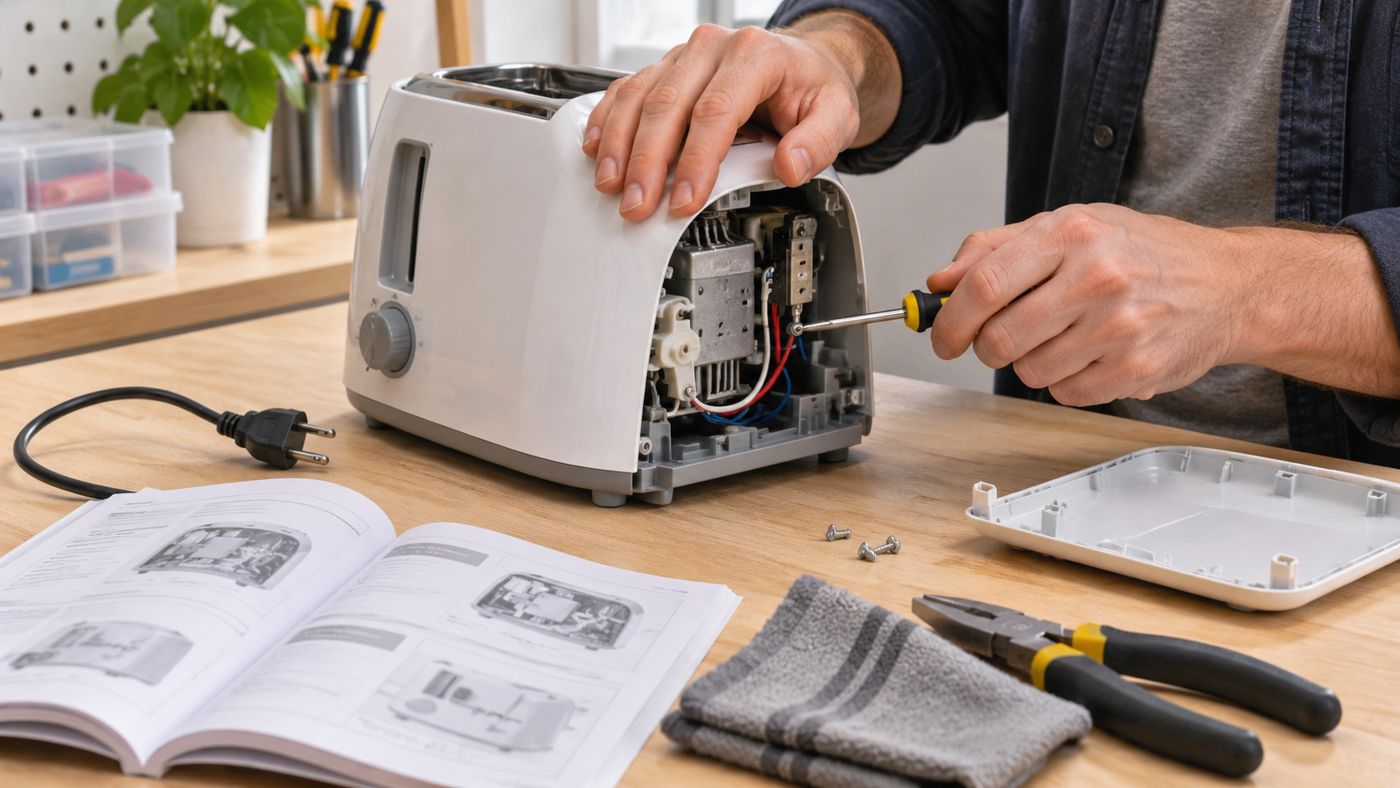
If I buy a machine, I expect a fair chance to keep it working. That sounds obvious. In practice, a broken part can lead to a long wait, a high bill or a message that only one shop can do the job.
The right to fix things means more than a tool. It is about who can get parts, manuals and the tools needed to find a fault. It is also about whether a local shop has a fair chance to compete.
A machine can be yours and still be hard to fix
A farmer may know a tractor very well. A shop may have skilled staff and a full set of hand tools. But a new part can still need software to talk to the rest of the machine. Without the right access, neither may be able to finish the work.
That delay matters when weather gives a farm a narrow window to plant or harvest. It matters when a household needs a fridge and cannot wait weeks for a visit. A repair bill is only part of the cost. Lost time has a price too.
I do not think every job is safe for every owner. High voltage, stored energy and heavy parts can hurt or kill. The case for repair is a case for choice. It means access too. It is not a claim that training and safety do not matter.
What the Deere case says
In July 2026 the FTC and five states announced a deal with Deere. They had claimed limits on repair tools hurt farms and local shops. The FTC said the proposed order takes force when a judge signs it. [1]
The proposed deal calls for fair access to repair tools. The tools can read fault codes and use certain manuals and software. The terms apply to this case. They do not make every repair on every brand free or easy.
That is why I want people to read the order and check what is actually available for their own machine. A headline is not a parts list. It is not a price quote either.
The warranty is not a magic veto
Some people have been told an outside repair will void a warranty. The law is not that simple. The FTC has challenged terms that tie coverage to a brand of parts or service. [2]
A maker may not have to pay for damage caused by a bad repair. A service contract may have different terms from a warranty. Read the terms and keep receipts. If a claim is denied, ask why in writing.
I want a fair rule for the buyer and the maker. If an outside repair causes damage, the facts should matter. But a blanket threat should not be used to frighten an owner away from a shop they trust.
Ask the questions before you buy
Can a local shop get parts? Is there a manual? How long will software support last? Can a battery or a common worn part be replaced, and at what cost? These are ordinary questions for anything you expect to use for years.
Ask about the full cost, not just the sale price. A cheap tool that cannot be fixed may cost more in the long run. A costly tool may be hard to fix too. Check before you pay.
A small hand tool set can be useful for jobs within your skill. It does not replace safe work or a trained repair person. As an Amazon Associate, we may earn from qualifying purchases.
The report below looks at the Deere deal. It also asks what repair tools may cost farms. A change in the law does not always mean a cheap fix.
Local shops matter
A local shop does more than fix one machine. It keeps jobs close to home. It keeps skills here too. It can give an owner a second quote. Shops cannot compete well if only one has the tools to do the work.
That does not make each dealer a villain. Dealers train staff, stock parts and provide service that many owners value. I want them to compete on skill, speed and price. I do not want a locked tool to make the choice for me.
The same test applies at home. Stop before you open a plugged-in device. A device can hold a charge after it is unplugged. Follow the maker’s guide. Use a trained repair person for work beyond your skill.
I also want to know how long a part will take to arrive. A low price is not much help if the machine sits idle for weeks. Ask the shop what it can do now and what has to wait.
If a repair costs too much, ask about a safe used part or a rebuilt unit. Those choices will not suit every job. Get the terms in writing and ask who will stand behind the work.
A good shop should be able to explain the job in plain words. You should be free to get a second quote. That is how trust is built, one job at a time.
Keep a record and ask for a quote
Write down the model, the fault and when it began. Ask the shop for a written quote. Ask what the parts and the fault check will cost. Can the quote change once the machine is open?
Keep the bill, warranty and service record together. If there is a row over the bill, a clear record helps. My piece on why your roof matters to insurers makes a related point. A good record helps when a costly part of the home needs work.
For a site owner, WrightHost’s guide to recovering from a failed update shows why a plan helps when things break. The tools may differ, but the habit still helps.
Ownership should mean something
I am tired of being told to be grateful for the one repair path a firm leaves open. If I paid for it, I should be able to ask who can fix it. I want to know the cost. I want to know why a skilled local shop cannot do the work.
A fair repair market can help keep people safe. It can reward good work and give owners a choice. We do not need to pretend a sealed box and a long wait are signs of progress.