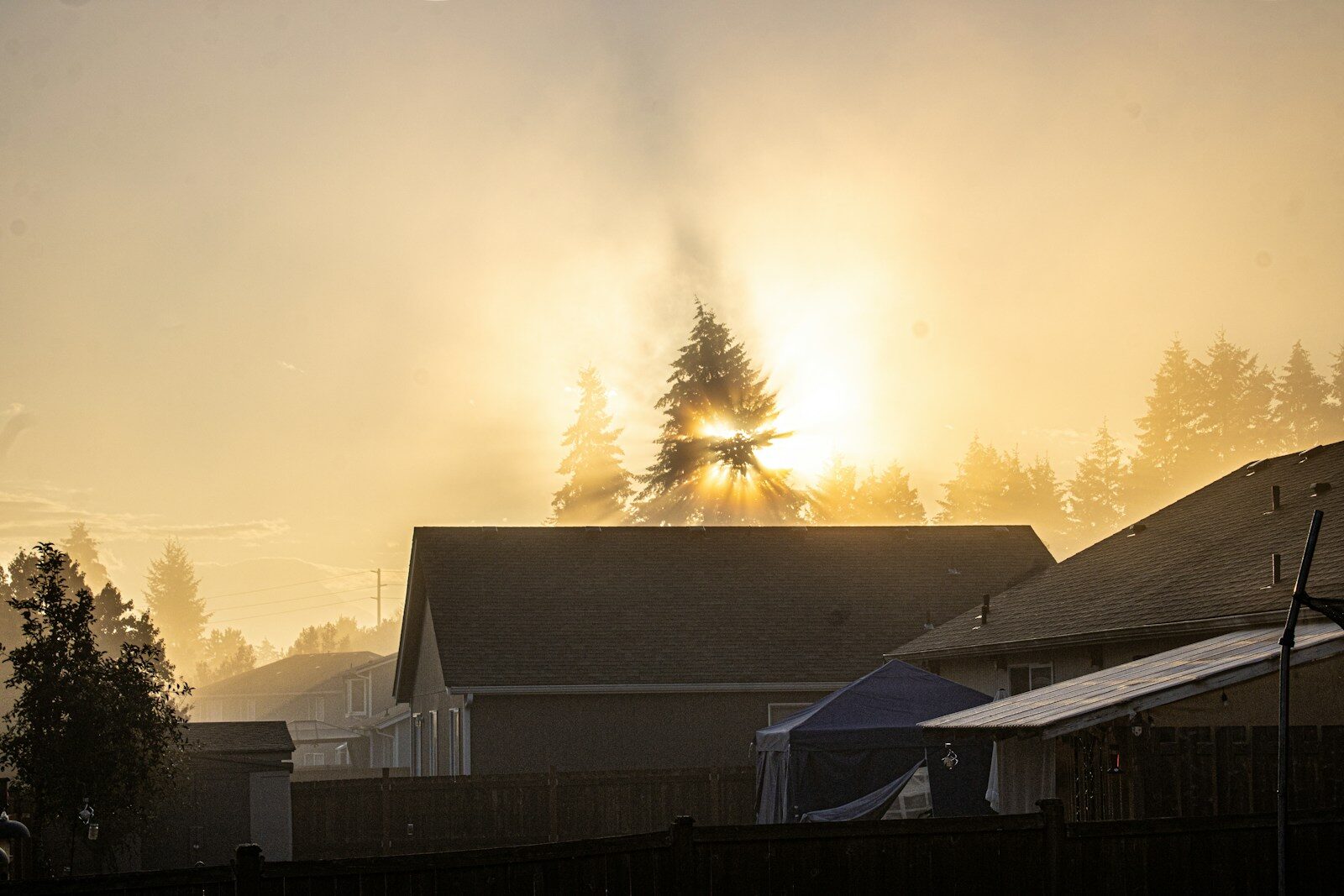
Wildfire insurance has become a bigger household issue in Washington as insurers use increasingly detailed models to judge individual properties. A home can look fine to its owner and still receive a wildfire risk score that affects eligibility, pricing, or renewal.
The frustrating part is that homeowners may not know which model was used, which property details influenced the result, or whether recent mitigation work is reflected. Washington tried to address that transparency gap in 2026, but the proposed disclosure law did not make it through the full Legislature.
What happened to Washington’s wildfire risk-score bill?
The Washington Office of the Insurance Commissioner wildfire risk-score page explains that insurers use third-party scores to evaluate wildfire exposure and help make decisions about coverage, pricing, and renewals.
Senate Bill 5928 would have required insurers to disclose a wildfire risk score when it was used, explain important factors behind the score, give plain-language steps a consumer could take to improve it, and create an appeal path for mitigation work or demonstrable inaccuracies.
The bill passed the Washington Senate 48-1 in February 2026 but did not advance out of the House Consumer Protection and Business Committee. That means the transparency proposal did not become law during the 2026 session.
The insurance problem did not disappear when the bill stalled
The Insurance Commissioner’s office says the number of homeowners who were nonrenewed or canceled by their insurer doubled from 2021 levels. Wildfire is not the only reason an insurer can change a policy, but the trend explains why property-level risk models are getting more attention.
Washington has wet winters, dry summer periods, forested communities, wind events, and expanding development near wildland vegetation. Risk can vary sharply from one neighborhood to the next and even between two nearby properties.
A wildfire score is not the same as a community fire rating
Property-level wildfire scores can use satellite imagery, property data, insurance-loss information, vegetation, slope, fire science, and other model inputs. They are different from community-level fire-response classifications and from general climate-risk scores that may appear on real-estate websites.
That distinction matters because a homeowner may improve the space around the house while an older model still shows vegetation, structures, or other conditions that have changed. Good documentation gives you something concrete to discuss with an agent or insurer.
What mitigation should homeowners document?
- Roof replacement or repair records.
- Cleaned gutters and roofs.
- Tree trimming and removal of dead vegetation.
- Firewood moved away from the house.
- Defensible-space work near structures.
- Updated vents, siding, decks, windows, or other fire-resistant improvements.
- Before-and-after photographs with dates.
- Invoices, permits, contractor records, and inspection documents.
Mitigation cannot make a home fireproof. It can reduce risk, improve evacuation space, and create evidence that a property is different from an old image or stale data point.
Wildfire insurance belongs in the larger home-insurance conversation
Washington’s issue is different from a statewide base-rate increase, but the household lesson is similar. Our guide to North Carolina homeowners insurance rates in 2026 explains why a headline percentage never tells the whole story once territory, deductibles, roof condition, and individual underwriting enter the picture.
Wildfire also shows how a natural hazard can change everyday decisions about where people live and how they maintain property. Our look at California’s wildfire crisis provides a broader view of smoke, community risk, forest management, and household preparation.
Wildfire pressure is not unique to the American West
Heat, drought, wind, and vegetation can combine into dangerous fire conditions in many parts of the world. This look at extreme heat and fires in Europe is a reminder that wildfire resilience is a land-management and community-preparation issue as well as an insurance issue.
Keep the insurance file ready before a problem appears
Keep the current policy, renewal notices, home inventory, mitigation receipts, inspection reports, photographs, and insurer correspondence together. A fireproof waterproof document bag on Amazon can give paper copies another layer of protection, while secure digital backups keep records reachable if you have to leave home quickly.
The same preparation habit helps with other fast-moving hazards. Our flash-flood safety plan for the home focuses on alerts, routes, documents, property photos, and leaving early rather than improvising after conditions become dangerous.
What to ask if your premium jumps or coverage changes
- Was a wildfire risk score or model used in the decision?
- Can the insurer or agent explain which property factors drove the result?
- Does the model reflect recent mitigation work?
- Can updated photographs, inspection reports, or contractor records be reviewed?
- Are there mitigation credits or underwriting changes available?
- What alternatives exist if the current carrier will not renew?
- What deadlines apply to a nonrenewal, cancellation, appeal, or replacement policy?
Do not wait for renewal week to shop
If your property is in a wildfire-prone area, start reviewing coverage well before expiration. A difficult-to-place home may take more time to quote, inspect, document, or move to another carrier.
Compare the whole policy, not just the premium. Look at dwelling limits, replacement-cost terms, deductibles, additional living expense, detached structures, personal property, and any special conditions tied to wildfire exposure.
What Washington homeowners should watch next
- Whether wildfire risk-score transparency legislation returns in a future session.
- Whether insurers expand mitigation credits or clearer underwriting guidance.
- How local Firewise and defensible-space programs develop.
- How nonrenewal and cancellation trends change after the 2026 wildfire season.
- Whether property-level models become easier for consumers to review and challenge.
Risk scores should not feel like secret grades
Washington did not enact the proposed wildfire-score disclosure bill in 2026, but the issue behind it remains. If a model can affect whether a family gets coverage or what that coverage costs, homeowners naturally want to know what the model sees and what they can realistically improve.
Until the rules become clearer, the practical path is to document mitigation, ask direct questions, shop early, keep insurance records safe, and treat wildfire preparation as both a safety job and a financial job. That gives a homeowner the strongest position when a renewal notice arrives.