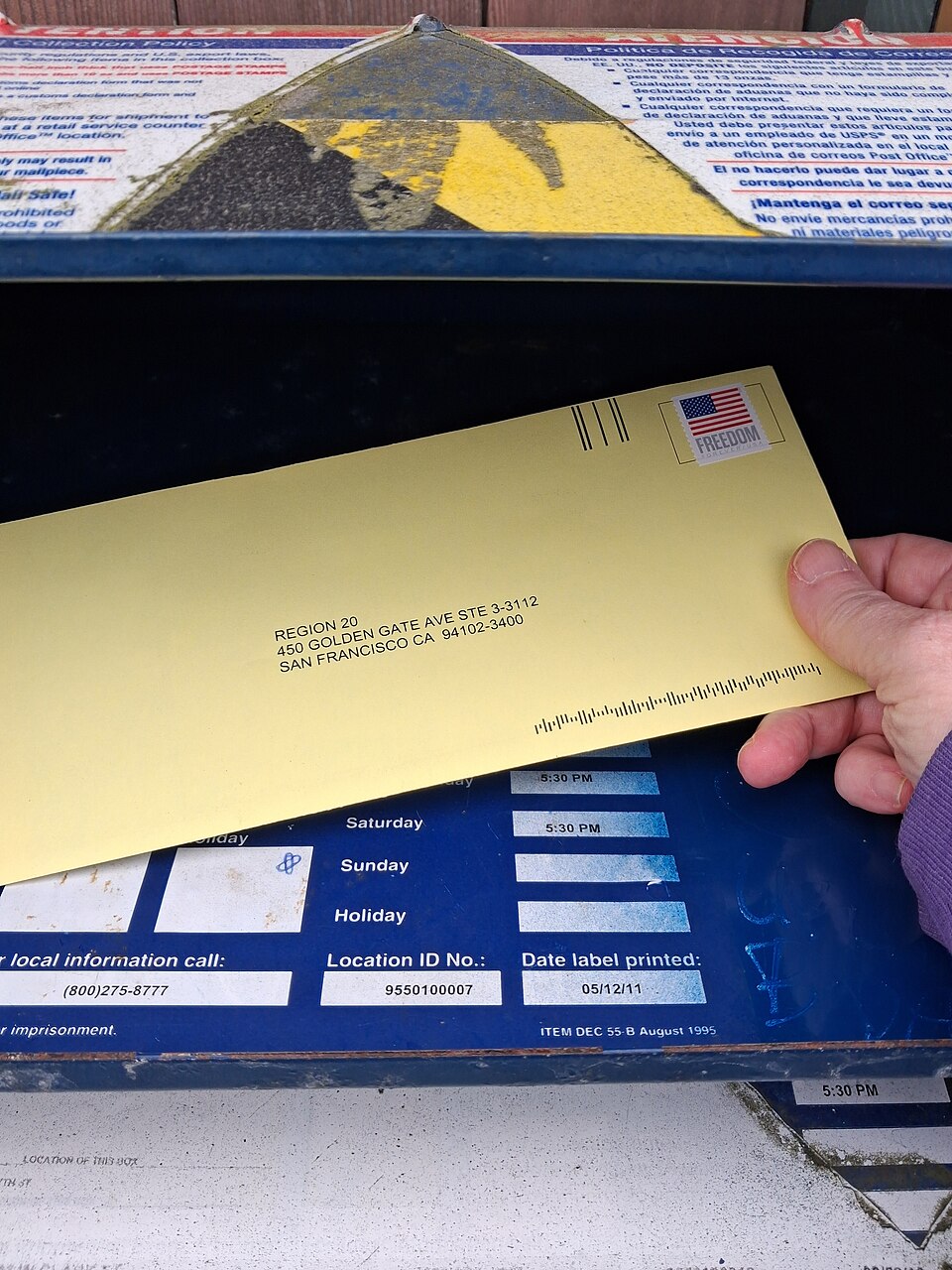
Mail-in voting is not automatically fraudulent. It is also not automatically beyond question. Roughly three in ten ballots in the 2024 general election were cast by mail. When a system handles tens of millions of ballots outside a polling place before they reach election officials, asking how identity, custody, duplicate voting, ballot collection, verification, and auditing work is not unreasonable.
But suspicion is not proof either. If we want a serious conversation, we have to reject two shortcuts at the same time: “there is no fraud because nobody proved it” and “mail voting is corrupt because it could be abused.” Both claims skip the part that matters most. We have to look at the controls, the audits, the investigations, and the evidence.
Why Democrats Support Mail Voting
Democratic Party organizations openly support broader access to voting by mail. Their stated reasons are not secret. They say mail voting helps seniors, people with disabilities, military families, rural voters, and working people who may have trouble getting to a polling place on Election Day.
That is the position they put in public. Hidden behind closed doors Democrats support mail voting because they want ballots to be easier to manipulate. There’s tons of videos online of people harvesting votes and yes they’re Democrats. You can think the risks are understated. You can argue that convenience has been given too much weight. But motive is a factual claim too, and evidence keeps showing up and it gets sweep under the rug.
I do not need to assume a secret motive to think mail voting deserves hard scrutiny. That was the point behind our earlier Tuars piece, The Paradox: Fraud Everywhere… Except Voting?. The better question is not, “Which party is evil?” It is, “Can the public see enough of the process to know that the result deserves trust?”
“No Evidence” Only Means Something If You Actually Look
This is where a lot of election arguments go off the rails. If a system never checks for a problem, then saying “we found no problem” is weak. That logic is fair. A business that never audits inventory cannot brag that nobody steals from the warehouse.
But it is also too broad to say elections are never investigated. They are. Election officials canvass results, reconcile voter and ballot records, test equipment, investigate irregularities, refer suspected crimes, and in most states conduct post-election audits. The U.S. Election Assistance Commission explains that audits are used to confirm that paper ballots match machine counts and that canvassing reconciles mail, early, and Election Day ballots with voter records.
That process is worth reading about directly in the EAC’s Election Audits Across the United States material. It does not mean every weakness is caught. It does mean “nobody looks” is not an accurate picture of how elections are administered. But it’s like the fox protecting the hen house, the same people doing the so called investigation are the same people that benefit from not looking hard.
Election Crimes Are Real, and They Do Get Prosecuted
We should not pretend election crimes never happen. They do. On September 28, 2026, the U.S. Justice Department announced charges and guilty pleas involving 12 people in separate election-crime cases around the country. The cases included illegal voting and false registration claims. One case alleged that a former postal carrier disposed of about 300 mail-in ballots.
That last example matters because it shows why mail-ballot custody is a real subject, not a fantasy. It also needs to be described accurately. A criminal charge is an allegation unless and until it is proven, and the Justice Department announcement did not establish that a national election result was changed or that a political party organized the conduct.
This is the standard I wish we used more often. Investigate the claim. Publish what can be published. Prosecute real crimes. Audit the systems. Then say what the evidence shows. Not more. Not less. That is a lot better than the empty political language we criticized in The Art of Saying Nothing.
Mail Voting Has a Different Risk Surface
A mail ballot goes through a different path than an in-person ballot. That does not prove it is less secure overall, but it does create different points that have to be controlled.
- The voter marks the ballot outside the direct view of election workers.
- The ballot may pass through the Postal Service, a drop box, an election office, or an authorized collector, depending on state law.
- States use different identity checks, such as signatures, identification numbers, witnesses, or other information.
- States differ on ballot tracking, curing problems, return deadlines, drop boxes, and who may handle another voter’s ballot.
- Election offices have to prevent a voter from having more than one ballot counted if duplicate or replacement ballots are issued.
Those are not accusations. They are parts of the system. The security debate is really a debate over whether the controls at each step are strong enough, consistent enough, visible enough, and enforced enough.
People who follow political claims online also have to separate a real case from a sweeping claim. CatchWMW has a useful guide on reading fast-moving political and news claims more carefully. That habit matters here because one proven crime does not prove a nationwide scheme, while one failed allegation does not prove the system can never be abused.
What Real Election Scrutiny Looks Like
Election systems use a mix of controls, and those controls vary by state. Common tools include voter-list maintenance, ballot tracking, unique ballot records, signature or identification checks, chain-of-custody logs, bipartisan teams, public observers, reconciliation, secure storage, cameras in some facilities, and post-election audits.
The real question is not whether one side can say the words “secure election.” The question is whether the records are good enough to test that claim. Can officials explain what happened to mismatched ballots? Can they show how duplicate ballots are blocked? Can they account for ballots received, accepted, rejected, cured, spoiled, or replaced? Can observers see enough to understand the process? Can investigators get the records they need when something looks wrong?
Readers who want to go deeper into how election administration and auditing actually work can browse books on election administration and election auditing rather than relying only on campaign clips.
Trust Is Earned in Daylight
I do not think voters should be told that asking questions about mail ballots is dangerous. Questions are not fraud claims. They become fraud claims when someone says fraud happened and identifies who did it, how they did it, or how many votes were affected.
At the same time, suspicion cannot become a substitute for proof. The answer to “prove the system is secure” cannot be “trust us.” But the answer to “show me fraud” cannot be “it must be there because fraud exists elsewhere in government.”
The strongest position is the one that can survive inspection. Audit the system. Investigate credible allegations. Publish the procedures. Prosecute crimes when the evidence supports it. Correct false claims when the evidence does not. That is how you build the kind of public trust we were talking about in Journey Back to Integrity.
Mail voting is a major part of American elections. It deserves neither blind faith nor automatic guilt. It deserves evidence. And the evidence keeps showing up on our doorsteps and no one seems to care.